ginger vegetable soup with mushroom stock
February 16, 2014
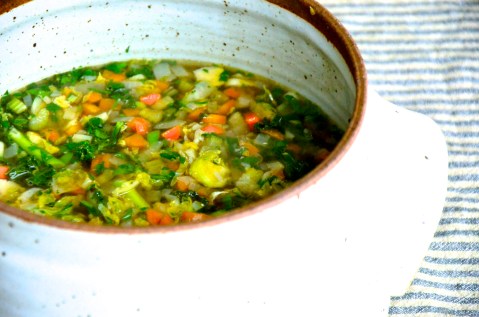
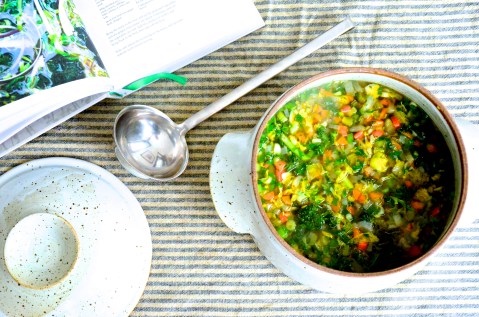
I like this recipe for a number of reasons. First, it’s a great detox when you are feeling in the need for some cleansing. Second, it’s a great way to clean out the refrigerator when you’ve got odds and ends of kale, broccolini, mushrooms, green onions, whatever. Third, it’s a great way to carry any elemental, delicious, nurturing stock whether veggie, mushroom, or dashi. I adapted it from a new cookbook call A Love For Food. I went to London this past December with my Global Alliance for the Future of Food hat on, for a meeting on the true cost of food – check out what HRH The Prince of Wales has to say on the subject – and we were given the cookbook as a gift. It’s full of all sorts of British fare like Welsh Rarebit and Chutney, Bubble and Squeak, Pan Haggerty … you get the picture. Use the recipe below as a guideline but use your imagination and whatever happens to be left in the back corners of your fridge.
 2 tbsps olive oil
1 medium onion, diced
Various quantities of various vegetables (carrots, brussels sprouts, cabbage, kale, celeriac, celery, leeks, etc.), chopped finely or shredded
3 cloves garlic, minced
3 tsps fresh ginger root, minced
6 cups stock, veggie, mushroom, or dashi
bunch cilantro, chopped
bunch parsley, chopped
bunch of basil, chopped
sea salt and pepper to taste
Heat olive oil in a heavy-bottomed pot. Add onion and shredded vegetables, garlic and ginger, and cook until soft, about 6 minutes. Add stock and bring to a boil. Turn down the heat to low and let simmer while vegetables continue to cook and flavours meld, about 6 minutes. Add herbs, salt and pepper to taste. Adjust seasoning and serve.
popcorn
February 9, 2014
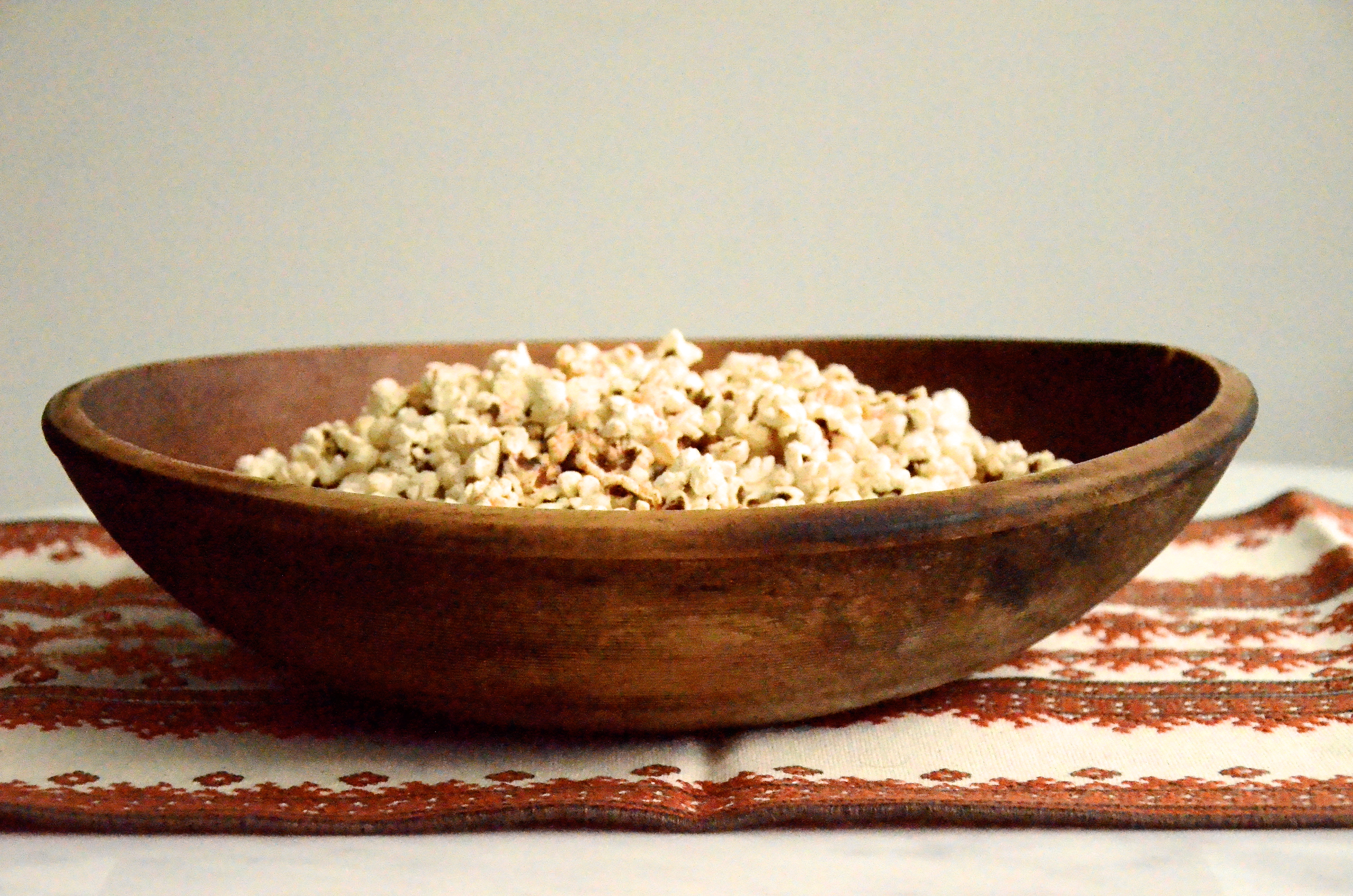
Many of us have grown up with butter-drenched popcorn, so what to do when you don’t eat butter? I’ve tried just plain old popcorn, or adding a topping or two, but it wasn’t until Rebekah came home with a recipe from a recent trip to visit her friend Emma in Massachusetts that I was totally satisfied in a butter-drenched kind way. It’s not tricky or complicated, just good. Wholesome goodness with coconut oil, simple olive oil, sea salt, and natural seasoning. This recipe features smoked paprika but there are innumerable ways to approach it from curry powder to fancy sea salt to cumin and coriander. But be warned, it’s highly addictive.
2 tbsps coconut oil
2/3 cup organic popcorn kernels
a few pinches smoked paprika (optional)
sea salt to taste
Heat coconut oil in a heavy-bottomed pot or dutch oven until melted and it forms a thin layer on the bottom of the pot. Turn heat down to medium or medium-low and add popcorn kernels. Put the lid on the pot and leave to pop without stirring or fussing. Once all the kernels have popped, add sea salt to taste, paprika if using, and toss well. Serve.
smokey tempeh sandwich with sun-dried tomato pesto
February 2, 2014
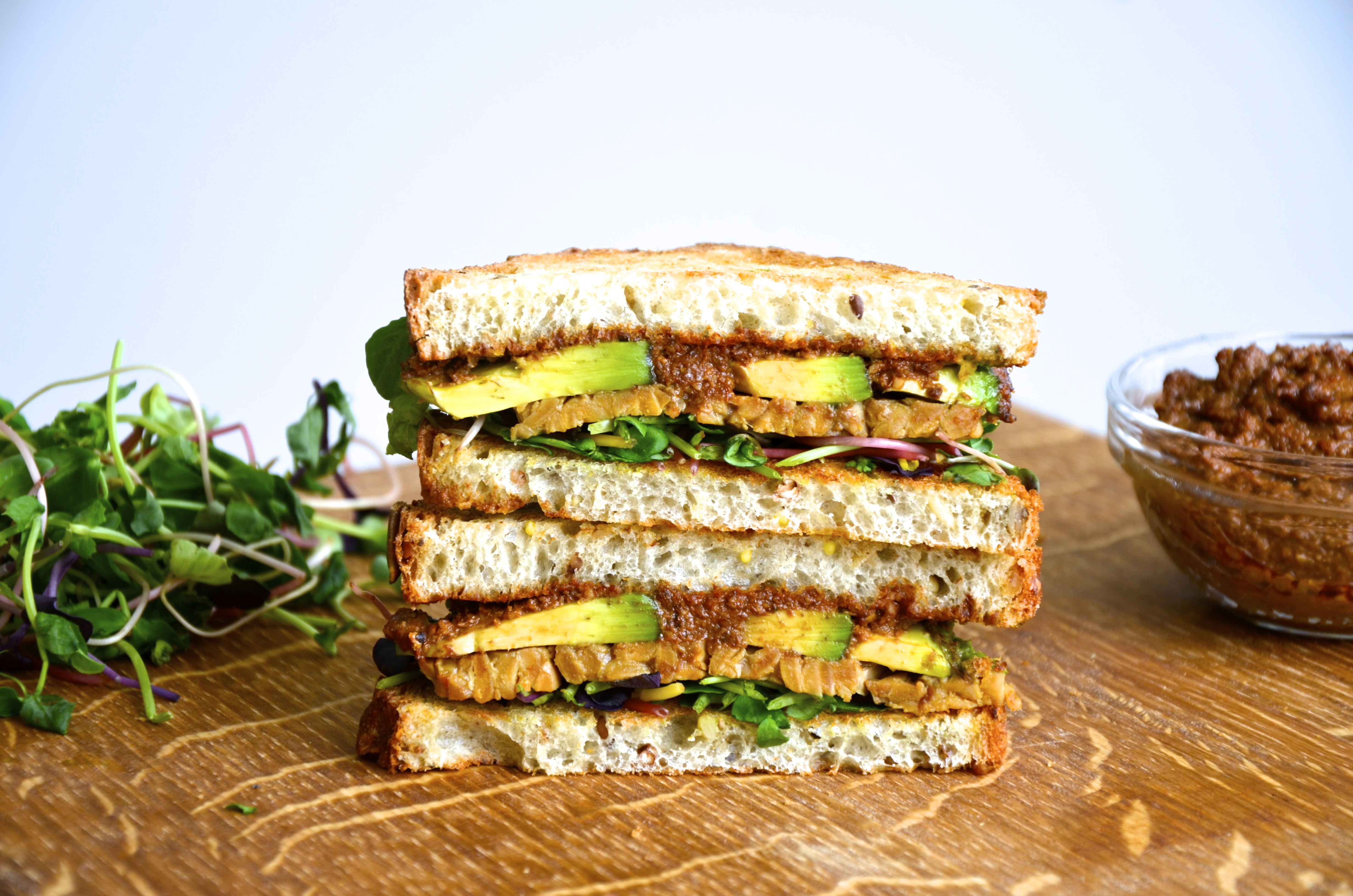
Bekah has been surfing fabulous food blogs and somehow tripped upon My New Roots. It’s a great food blog by a Torontonian living in Copenhagen and it has a beautiful blended feel of both the austerity and crispness of Scandinavia and the down-to-earth rootedness of Canada. That’s my take anyway. Sarah Britton, who created the blog, posted this scrumptious looking smokey tempeh sandwich with sun-dried tomato pesto, so Bekah and I whipped it up for lunch, Bekah did the photography honours (because she’s way better than me), and then we tucked into what is a very tasty sandwich. The bread makes a big difference – as does the quality of all the ingredients – so make sure, as Michael Pollan would say, to pay more and eat less. It’s worth it.
Sun-dried Tomato Pesto
1/3 cup organic sun-dried tomatoes
2/3 cup hot water
½ cup pumpkin seeds
1 clove garlic
2 tbsp cold-pressed olive oil
salt to taste
1 tsp raw honey or maple syrup
Place the tomatoes in a bowl and cover with just-boiled water. Let soak until soft, about 30 minutes.
In a dry skillet over medium heat, lightly toast the pumpkin seeds until they puff up and smell nutty. Be careful not to burn them! If you want a completely raw pesto, skip this step or soak the seeds overnight to activate them.
Drain the tomatoes through a strainer over another bowl to catch the water – you need to save the liquid for the pesto as it contains many nutrients and tons of flavour.
In a food processor, pulse peeled garlic to mince. Add all other ingredients, except salt and sweetener, and blend on high until smooth. Taste for seasoning and add salt or sweetener if desired. Store in a tightly sealed glass container in the fridge for up to one week. Enjoy on sandwiches, with eggs, on pasta, or as a dressing on grain salads and fresh veggies.
Smoky Tempeh
1 package tempeh 7oz. / 200g
1 tbsp tamari
1 tbsp maple syrup
1 tsp melted coconut oil
1 tsp smoked hot paprika or ground chipotle
Slice the tempeh into slabs or long strips, depending on the shape of your block of tempeh.
In an oven-proof dish whisk together all other ingredients. Place the tempeh in a single layer covering the bottom of the dish, then flip each piece so that it is coated with the marinade on both sides.
Place in a 375°F / 190°C oven for 20-30 minutes until the tempeh has absorbed the marinade. Remove from oven and let cool until you are ready to make your sandwiches.
Sandwich
2 slices wholegrain sourdough bread
a few slices of smoky tempeh 0r tofu
a generous slather of sun-dried tomato pesto
¼ – ½ ripe avocado
plenty of salad greens (spinach, butter lettuce, arugula etc.)
cracked black pepper
Toast bread if desired.
Slater one half of the bread with sun-dried tomato pesto. Place sliced avocado on top of the pesto, followed by tempeh and greens. Serve immediately and enjoy, or wrap up for a picnic later in the day.
warm winter squash salad with chickpeas and tahini
January 25, 2014

This is originally from the Casa Moro Cookbook via Food52, one of my go-to blogs for the recipes and fabulous Provisions store. It’s adapted slightly, from a slight adaptation. Which makes me happy – thinking about all these recipes that travel and get shared and get switched up slightly with each new rendition. My daughter, Rebekah, was my co-chef on this one and decided to add Jimmy Nardello Smoked Paprika from the amazing Vicki’s Veggies. Which is so fitting given the travelling and sharing. Why? Because of Jimmy.
Rumour has it that Giuseppe Nardiello and his wife, Angela, nurtured a favourite variety of sweet frying pepper in southern Italy in the region of Basilicata. When they set sail from the port of Naples in 1887, Angela carried a handful of the pepper seeds with her. They settled in Naugatuck, Connecticut, where they raised the peppers, and eleven children. The fourth one was a son named Jimmy. Jimmy was the only one of the Nardello children to inherit Angela’s love of the garden. Jimmy passed away in 1983. But before he did, he donated some of the heirloom pepper seeds to Seed Savers Exchange (SSE) in Decorah, Iowa. SSE specializes in protecting heirloom seeds, with more than 11,000 varieties protected in two separate climate-controlled vaults. One hundred and twenty years after the Nardellos set sail, bringing a small piece of their homeland with them, the pepper that bears the family name is becoming a favourite among chefs and home gardeners nationwide, but it is still registered as “endangered” on Slow Food USA’s Ark of Tastes. The Ark is an effort to find, catalog, and protect the world’s endangered flavours from the onslaught of the standardization of agriculture and cuisine. Crazy, right? Totally. But beautiful and important and poignant and a great addition to this warm winter salad.
2 pounds pumpkin or other winter squash, peeled, seeded, and cut into 1-inch cubes
1 garlic clove, minced
1/2 tsp ground allspice
1/2 tsp jimmy nardello smoked paprika
2 tbsps olive oil
Sea salt and black pepper
14 ounces canned or home-cooked chickpeas, drained
1/2 small red onion, finely chopped
4 tbsps fresh cilantro, roughly chopped
1 garlic clove, minced
3 1/2 tbsps lemon juice
3 tbsps tahini paste
2 tbsps extra virgin olive oil
2 tbsps water, to taste
Heat the oven to 425°F
Toss the squash with the garlic, allspice, smoked paprika, olive oil, and some salt and pepper.
Place on a tray, optionally lined with parchment, in the oven for 20 to 25 minutes, or until soft. Remove and allow to cool slightly.
While the squash is cooking, make the tahini sauce. Mix the minced garlic with lemon juice and add the tahini. Now thin with the water and olive oil, and check for seasoning. You should taste a balance between the nutty tahini and lemon.
To assemble the salad, place the squash, chickpeas, red onion, and cilantro in a mixing bowl. Pour on the tahini sauce and remaining oil and toss carefully. Season with salt and pepper. Serve. Eat. And say a prayer of thanks to Jimmy.
hot and sour soup
January 21, 2014
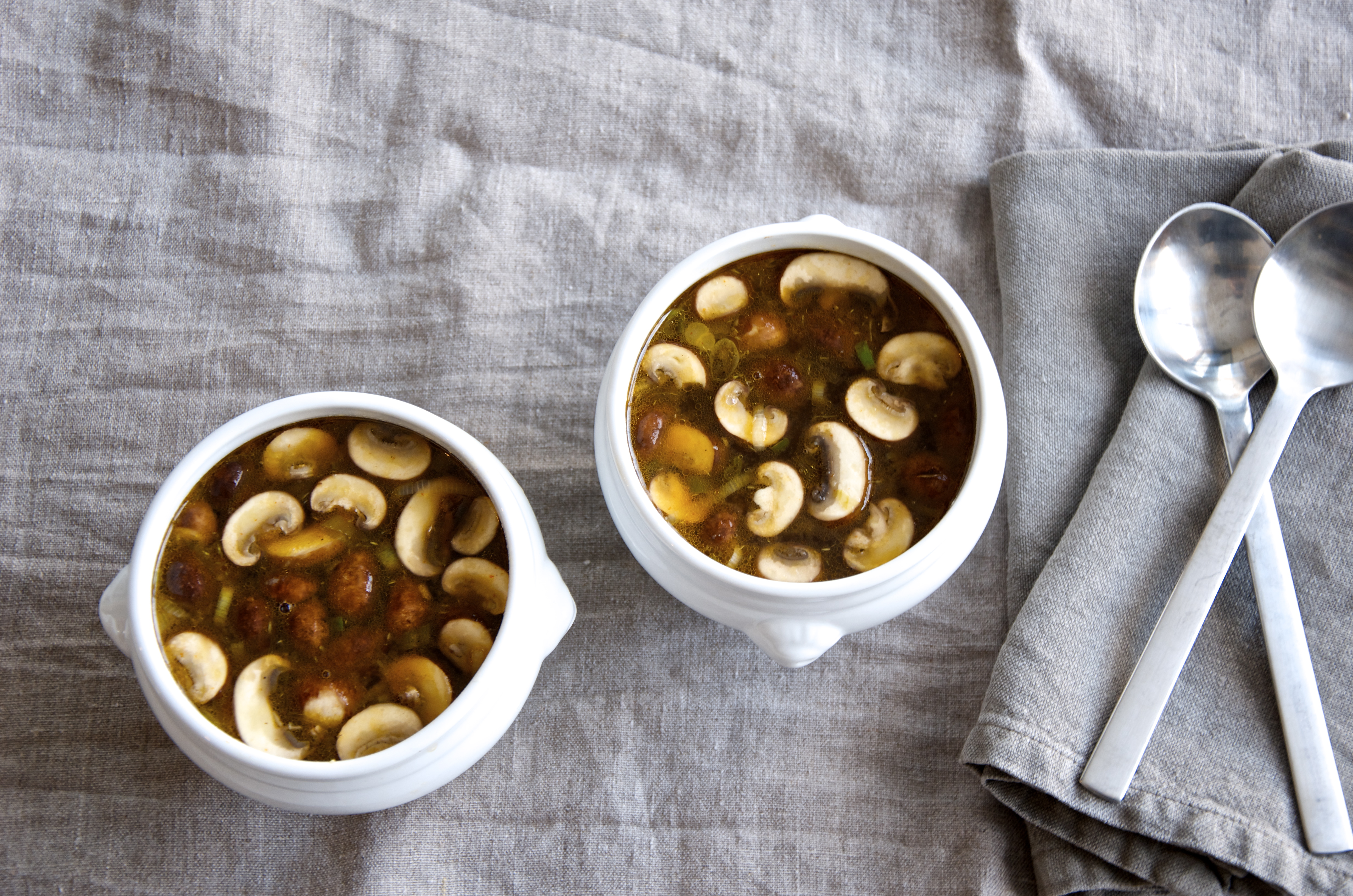
It’s -21 celsius (that’s -6 fahrenheit for our friends south of the border) here in Toronto which made me think that it’s a good day to put on a pot of hot and sour soup to warm the blood. I’m not exactly sure from whence and where hot and sour soup originates but lots of cultures have it – in China this soup is claimed variously by Beijing and Sichuan as a regional dish; Canh chua (literally “sour soup”) is indigenous to the Mekong River region of southern Vietnam; Cambodia has a version called Samlor machu pkong traditionally made with shrimp; Thailand has Tom yum; and India has its own versions typically made with red and green chillies, ginger, carrots, snow peas, tofu, soy sauce, rice vinegar and a pinch of sugar. Many hot and sour soups you find these days contain meat and some thickening agent like eggs or cornstarch, but the following version requires neither meat nor a thickener as the “hot” and “sour” stand out on their own on the main stage stage, as they should.
2 tbsps sunflower oil
6 green onions, white and green parts, minced
2 garlic cloves, minced
1 tbsp fresh ginger, minced
1 pound firm tofu, cubed
8 – 10 cremini mushrooms, sliced thinly
4 cups shiitake kombu dashi or veggie stock
1 tsp cane sugar
2/3 cup rice vinegar
3 tbsps tamari
1 tbsp sesame oil
1/2 tbsp sriracha*, or other hot sauce
ground pepper to taste
In a saucepan, heat the sunflower oil over medium- high heat. Add the green onion, garlic, ginger, tofu, and mushrooms, stirring occasionally for about 5 minutes until the flavours meld and everything softens up a bit.
Add the dashi or stock, sugar, vinegar, tamari, sesame oil, and sriracha and bring the soup to a boil. Turn down to simmer and let cook for 5 – 10 minutes over low heat. Add pepper to taste. Adjust to your liking with either more vinegar (for more “sour”) or more sriracha (for more “hot”).
Serve immediately with a little garnish of sesame oil, green onion, or pepper if you like.
*Please note that sriracha is now more than just a brand sauce. Other brands make sriracha and have been known to add shrimp paste. Huy Fong, the dominant provider of sriracha, does not have shrimp paste or fish sauce but just check before you buy.
mushroom barley stew with stout
January 12, 2014

Every January I post a mushroom recipe. Last year it was the fabulous and savoury mushroom tart. The year before that it was the creamy triple mushroom gemelli, not to be missed. The year before that, the comforting winter portobello stew. This year I’m featuring mushroom barley stew with stout – a recipe I’ve adapted from Rich Landau and Kate Jacoby’s vedge cookbook, named after their restaurant in Philadelphia. Not only is this stew thick and warming and richly flavoured with beer, mushroom stock, thyme and worcestershire sauce, but it’s inspired by chefs whose philosophy I love. Rich and Kate call vedge a vegetable restaurant, “not a vegetarian or vegan one, and only once you eat there do you truly understand that distinction. Rich’s dishes are jubilant celebrations of vegetables, not an attempt to accommodate a so-called dietary restriction.” This statement almost calls for a trip to Philly just to give Rich and Kate a high-five.
1 cup pearl barley, rinsed and drained
2 cups cubed parsnips
1 cup cubed celeriac
a handful of the babiest of baby carrots (or cubed carrots if you can’t find baby carrots)
1 pound mushrooms, hedgehog if you can find them, chopped
1 cup finely chopped onions
1 tbsp minced garlic
2 tsps sea salt
1 tsp freshly ground black pepper
2 tbsps olive oil
6 cups mushroom stock
1/2 cup stout or dark beer
2 tsps chopped fresh thyme
1 tsp vegan worcestershire sauce
2 tsps chopped fresh parsley
Heat 3 cups water in a large saucepan over high heat. When it comes to a boil, add the barley, reduce the heat to medium, and cook until all of the liquid if absorbed, about 40 minutes. Remove the pan from the heat and set aside to cool for at least 20 minutes.
Preheat oven to 450 degrees. In a large bowl, combine the parsnips, celeriac, carrots, mushrooms, onions, garlic, sea salt, pepper, and olive oil. Toss to distribute the oil, then spread the vegetables on a sheet pan in a single layer and roast until the vegetables start to caramelize at the edges, about 15 minutes.
Meanwhile, combine the stock, beer, cooked barley, thyme, and vegan worcestershire sauce in a large dutch oven and bring to a boil over high heat. Reduce the heat to a simmer.
When the roasted vegetables are done, carefully transfer the roasted vegetables to the stock. Add parsley, adjust seasoning, and serve immediately with some nice crusty bread and a pint of your favourite beer.
mushroom stock
January 11, 2014

I made this stock to go with the mushroom barley stew with stout but it’s good enough to just drink as a soup on a cold winter’s day.
4 cups mushroom trimmings and/or mushrooms, wiped clean
1 onion with skin, chopped
1 cup dried shiitake
1 tbsp porcini powder
3 tsps salt
2 rosemary sprigs
water
Place all the ingredients in a large stock pot with plenty of water. Bring to a boil and then turn heat down. Let simmer for 40 minutes on low heat. Remove from the heat and let sit for 5 more minutes. Strain. Cool. Store for use as needed.
spidskål
January 1, 2014

What you probably know is that cabbage is a leafy green plant grown as an annual vegetable crop for its dense-leaved heads and is closely related to other veggies, like broccoli, cauliflower, and brussels sprouts. What you probably don’t know is that cabbage was most likely domesticated somewhere in Europe before 1000 BC and that by the Middle Ages, it had become a prominent part of European cuisine, especially in the wintertime because it’s so hardy. Denmark was no exception. Spidskål is a Danish Cabbage Salad featured by Mikkel Lippman from Copenhagen in the new Kinfolk Table. I used Nappa Cabbage for this recipe which is a Chinese, not Danish, Cabbage with a Japanese name – “nappa” is colloquial term in Japanese referring to the leaves of any vegetable, especially when used as food. So, once again, the world meets in this simple, elegant dish with a crispness from the cabbage, a nuttiness from the sesame seeds, and a tanginess from the dressing. But despite its simplicity – perhaps because of it – it can hold its own on any celebratory table.
1/2 cup white sesame seeds
1 head napa cabbage
3 tbsps red wine vinegar
2 tsps Dijon-style mustard
1/2 cup extra-virgin olive oil
1/2 tsp sea salt
1/4 tsp freshly ground black pepper
Toast the sesame seeds in a small, dry skillet over medium-low heat, stirring constantly, for about 5 minutes or until lightly browned. Cool completely.
Discard any torn or wilted leaves from the outside of the cabbage. Cut the head in half and discard the core. Finely shred or chop the cabbage, placing it a wide mixing bowl as you work. Sprinkle with salt and pepper. Add half of the toasted sesame seeds. Toss well and set aside.
Combine the vinegar and mustard in a small mixing bowl. Gradually whisk in the oil to form an emulsified dressing. Drizzle the dressing over the cabbage and toss to coat evenly. Transfer to a serving bowl. Sprinkle with the remaining toasted sesame seeds. Serve cold or at room temperature.
baby beluga lentils with roasted tomatoes and herbs
November 23, 2013

I’m heading to London, England next week and will be dining at the fabulous Ottolenghi’s on Tuesday night. I can’t wait. I use his cookbooks all the time and am very inspired by him. And now I get to feast on his creations prepared by – not by me in my humble little kitchen – but by his peeps. So this recipe is in honour of that occasion. I’ve switched it up a bit but it’s still his signature style using fresh, good quality ingredients in a simple way with heaps of fresh herbs to make it sing.
10 cherry tomatoes, quartered
8 thyme sprigs
1 tbsp olive oil
2 tbsp thick balsamic vinegar
1 tsp sea salt
1 small red onion, very thinly sliced
1 tbsp good-quality red wine vinegar
1 tsp sea salt
1 1/3 baby beluga lentils
3 tbsp olive oil
1 garlic clove, crushed
3 tbsp chopped parsley
3 tbsp chopped chives
4 tbsp chopped dill
pine nuts, toasted
black pepper
Start by making the oven-dried tomatoes. Preheat the oven to 375 degrees. Quarter the tomatoes vertically and place skin-side down on a baking sheet lined with baking parchment. Arrange the thyme sprigs on top of them. Drizzle over the olive oil and balsamic vinegar and sprinkle with some salt. Roast for 1 hour, or until semi-dried. Discard the thyme and allow to cool down slightly.
Meanwhile, place the red onion in a medium bowl, pour over the vinegar and sprinkle with the sea salt. Stir, then leave for a few minutes so the onion softens a bit. Place the lentils in a pan of boiling water (the water should come 3cm above the lentils) and cook for 20-30 minutes, or until tender. Drain well in a sieve and, while still warm, add to the sliced onion. Also add the olive oil, garlic and some black pepper. Stir to mix and leave aside to cool down. Once cool, add the herbs and gently mix together. Taste and adjust the seasoning.
To serve, pile up the lentils on a large plate or bowl, integrating the tomatoes as you build up the pile. Drizzle the tomato cooking juices on top, sprinkle with the pine nuts, and serve.
tofu marabella
November 10, 2013
2 blocks extra firm tofu, cut into slabs
1 head of garlic, peeled and finely pureed
1/4 cup dried oregano
coarse salt and freshly ground black pepper to taste
1/2 cup red wine vinegar
1/2 cup olive oil
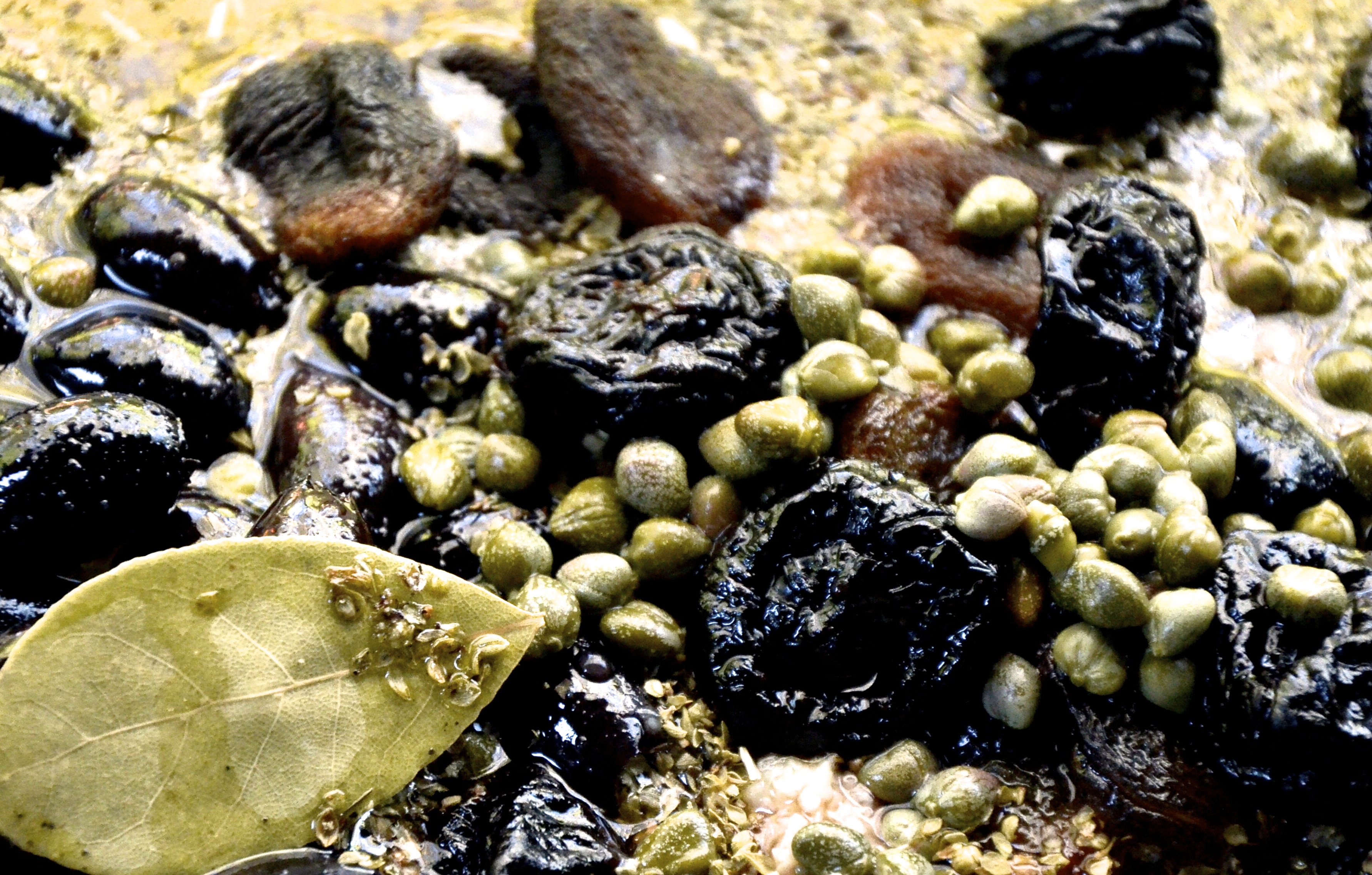
1 cup pitted prunes
1/2 cup pitted Spanish green olives
1/2 cup capers with a bit of juice
6 bay leaves
1 cup brown sugar
1 cup white wine
1/4 cup Italian parsley or fresh coriander (cilantro), finely chopped
Preheat oven to 350 degrees.
In a large bowl combine garlic, oregano, pepper and coarse salt to taste, vinegar, olive oil, prunes, olives, capers and juice, and bay leaves. Arrange tofu slabs in a single layer in one or two large, shallow baking pans and spoon marinade over it evenly. Cover and let marinate, refrigerated, overnight.
Sprinkle tofu pieces with brown sugar and pour white wine around them. Bake for 45 minutes, basting frequently with pan juices. Carefully transfer tofu, prunes, olives and capers to a serving platter. Moisten with a few spoonfuls of pan juices and sprinkle generously with parsley or cilantro. Pass remaining pan juices in a sauceboat.
 v:gourmet