asian noodle salad
April 10, 2011

I’m dedicating this recipe to Noah, our friends’ 15 year old son. He’s their devoted steak-frites eldest son and he announced last month that he’s gone veggie. Right on Noah! Bring it on. This recipe is for you – it’s easy, fresh, quick, healthy, and delicious. A recipe every 15 year old should have in their repertoire. And, for the rest of you, when you hear someone say “I could never do that, I like steak too much,” tell them about Noah. If he can do it, anybody can.
1/4 cup soy sauce
2 tablespoons rice vinegar
1 tablespoon toasted sesame oil
1/4 teaspoon dried hot red pepper flakes
1 garlic clove, minced
2 teaspoons grated peeled fresh ginger
200 gram package rice noodles
1 cup coarsely shredded carrot
3 scallions, cut crosswise into thirds and thinly sliced lengthwise
2 tablespoons sesame seeds, toasted
bunch cilantro, chopped
Cook rice noodles in a large pot of boiling water until just tender, then drain in a colander and rinse under cold water until cool. Meanwhile, mix together soy sauce, vinegar, oil, red pepper flakes, garlic, and ginger. Toss noodles with dressing, carrot, scallions, sesame seeds, and cilantro in a large bowl. Garnish with a little extra cilantro and serve.
roasted brussels sprouts with shallots and shitake
April 9, 2011

Andrew has recently rekindled his love affair with brussels sprouts which were never my favourite. Not because I didn’t like them necessarily, just because we never ate them growing up. And when one of my aunts did serve them at the occasional family Christmas dinner or Thanksgiving feast, they usually arrived at the table soggy, under-seasoned, and looking like sad, flaccid, little outcasts that everyone avoided. Well, times have changed and – in our house – we’re embracing the new era of the brussels sprout to give it its due.
For brussels sprouts
3 lb brussels sprouts, trimmed and halved lengthwise
1/4 cup olive oil
1/2 tablespoon minced garlic
1 teaspoon salt
For shallots and mushrooms
2 tbsps oil
1/2 lb large shallots (about 6), chopped
1 1/4 lb fresh shitake mushrooms (or chanterelle, oyster etc.), trimmed, quartered if large
1/4 cup dry white wine
1 tablespoon chopped fresh thyme
1/2 teaspoon salt
1/4 teaspoon black pepper
Put oven rack in upper third of oven and preheat oven to 450°F. Toss Brussels sprouts with oil, garlic, salt, and pepper, then spread out in 1 layer in 2 large shallow baking pans (17 by 12 inches). Roast, stirring occasionally and switching position of pans halfway through roasting, until tender and browned, 25 to 35 minutes.
Meanwhile, heat oil in a 10-inch heavy skillet over moderate heat. Sauté shallots, stirring occasionally, until golden brown. Add mushrooms, stirring occasionally, until golden brown and tender, about 7 minutes. Add wine, thyme, salt, and pepper and boil, uncovered, stirring occasionally, until liquid is reduced to a glaze, about 2 minutes.
Transfer to a serving dish and stir in brussels sprouts. Serve with pride and tasty anticipation.
kale + olive pesto
April 9, 2011

I know none of us want to admit this but we could all use a little more kale and collard greens in our life. They are probably one of the best things you can eat – like if you were stranded on a desert island or in the gulag in siberia and you could choose one food, kale would probably be a good choice. So instead of the “ho-hum, what do I do with this stuff?” – try this really tasty kale and olive pesto. I adapted it from fresh365 (who in turn adapted it from Gourmet) and immediately made a sandwich out of it on fresh olive baguette with roasted red pepper and arugula. Holy cow! Who said kale couldn’t be tasty and fun.
6 large kale leaves, center stems removed
12-15 large pitted Greek olives
2 large garlic cloves, peeled
1 tsp balsamic vinegar
3 tbsp pine nuts
1/3 cup sun-dried tomatoes, coarsely chopped
1/4 tsp cayenne pepper
1/4 tsp black pepper
1/2 tsp salt
1/3 cup olive oil
Bring a large pot of salted water to a boil. Add kale, and cook until tender, about 15 minutes. Let drain. Coarsely chop. In a food processor, blend olives and garlic until finely chopped. Add kale, vinegar, pine nuts, sun-dried tomatoes, cayenne, pepper and salt, and pulse until well chopped. With motor running, add oil in a slow stream, until well blended. Season to taste.
guacamole
March 27, 2011

Did you know that guacamole was made by the Aztecs as early as the 16th century. The name – āhuacamolli – comes from an Aztec dialect, āhuacatl (=”avocado”) + molli (=”sauce”). There are umpteen versions of guacamole and I’ve found that people are very attached to their own particular approach. Me? Not so much. I love them all. I tend to agree with those that espouse the less is more approach but I totally appreciate the pimped up versions as well. The recipe below is fairly minimal so feel free to add some of the other classic additions such as chopped tomatoes and minced jalapeño peppers. But make sure to mash it. The one thing I am a little more strict about is that it has to be chunky. None of this puréed stuff. Serve with crispy crunchy taco chips or on a yummy open face gauc and tomato sandwich. There are no end of places to take this guac!
2 ripe avocados
3 limes
1/2 sweet onion, chopped finely
3 cloves garlic, minced
bunch of cilantro, chopped
sea salt
Peel the avocado and remove the pit. Throw in a bowl along with the juice of 3 lemons, chopped onion, minced garlic and chopped cilantro. Mash with a potato masher. Season with sea salt to taste. Presto. Done-o.
open face guac and tomato
March 27, 2011

We had this for lunch today because we are now addicted to guacamole having scarfed our way through Mexico surviving on a guacamole diet. It’s so simple I almost didn’t post it but Andrew thought it deserved a spot on the blog alongside our other favourite, the VLT. Basically all you need to do is toast some foccacia and spread both pieces generously with guacamole. Then build your open face sandwich from there with arugula, sliced red onion, and sliced tomatoes. Sprinkle with sea salt and ground pepper and eat. It’s not the neatest sandwich but fully satisfying. Why don’t people put things like this on their menus?? Simplicity is the key to life.
blackened rice
March 26, 2011

This is best made along side the black bean stew since the cooking liquid from the black beans is what blackens the rice. It’s brilliant. As Deborah Madison says “The nutritious broth that remains from cooking black beans makes a flavourful, rich broth for cooking rice. Although motivated by common sense not to waste this delicious broth, I was delighted to find that using the broth this way is also a Mexican tradition.”
2 tbsps olive oil
1/2 white onion, finely diced
1 1/4 cups white rice
2 garlic cloves, minced
1/8 tsp anise seeds (or ground fennel)
2 cups broth from cooked black beans
salt
Heat the oil in a heavy saucepan. Add the onion and sauté over medium-high heat for 4 – 5 minutes. Add the rice, garlic, and anise and stir to coat the rice. Cook until it’s light gold, 3 to 4 minutes, then add the broth and salt and bring to a boil. Cover and cook over low heat until the rice is done, 15 to 18 minutes. Turn into a dish and garnish with diced jalapeño chiles, chopped cilantro, or pico de gallo.
black bean stew with chipotle and tomatoes
March 26, 2011
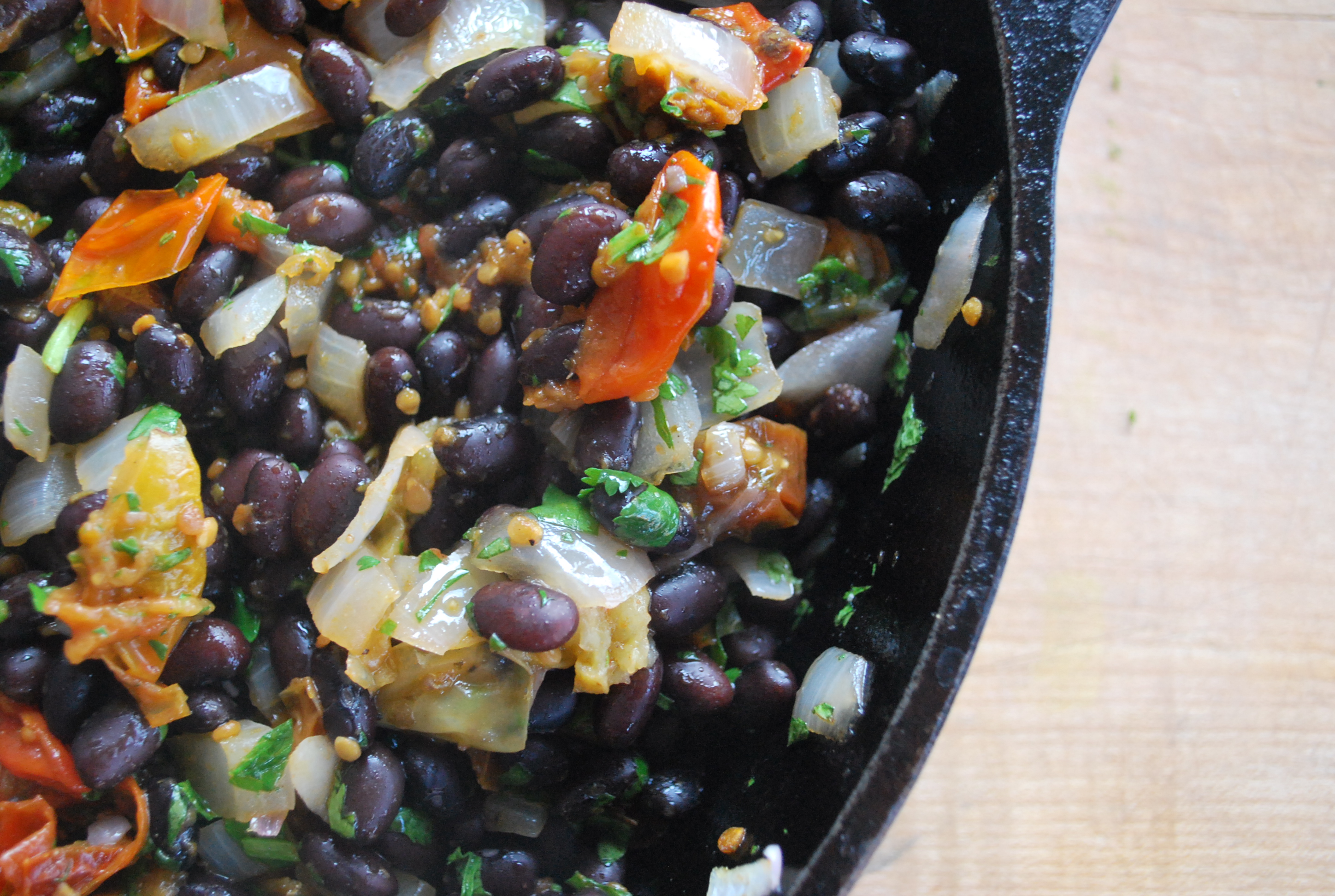
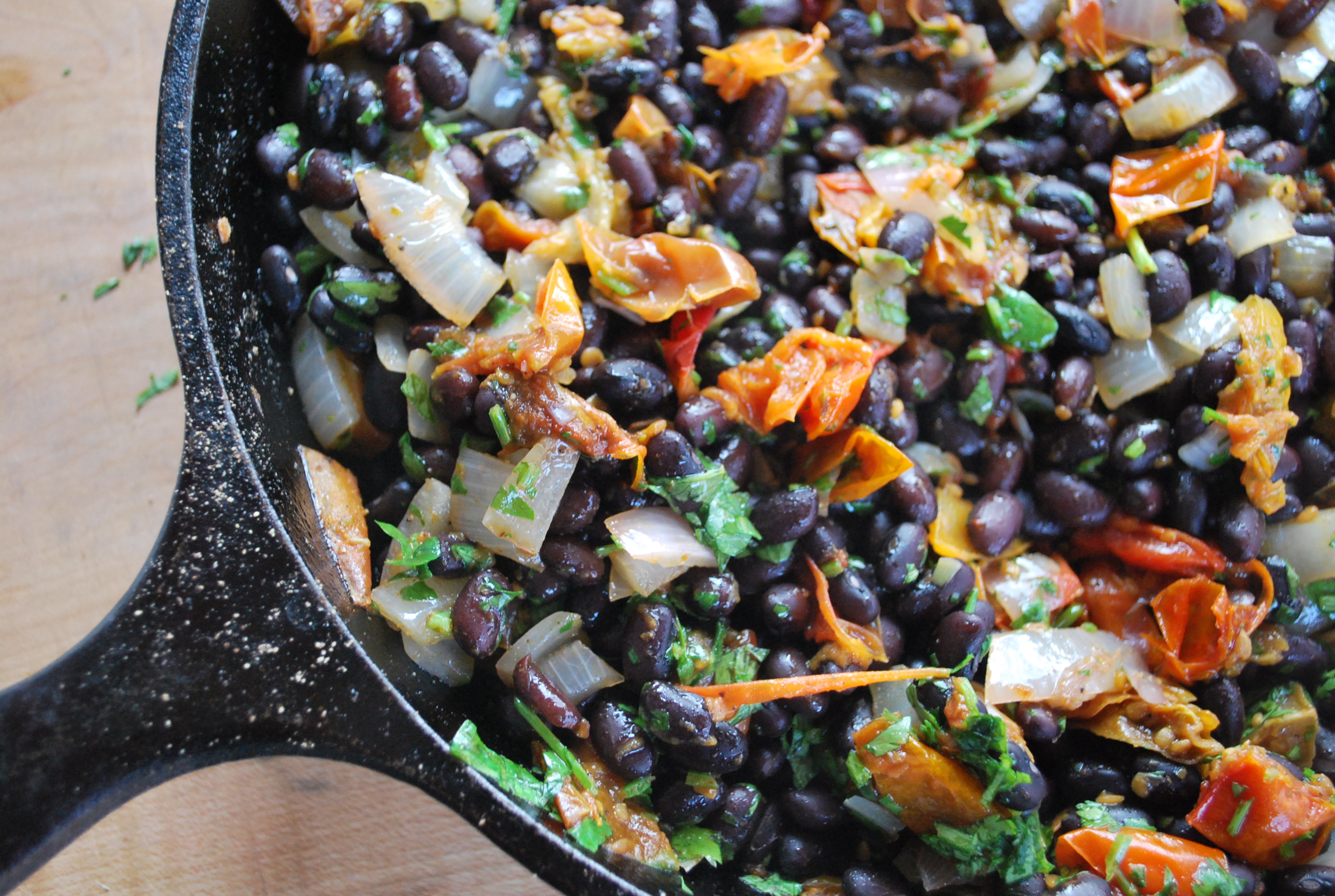
Viva la Mexico! We were in Tulum last week and got bitten by the Mexican foodie bug – guacamole, pico de gallo, black beans and blackened rice. I’m having a hard time coming back to the snow and cold as I dream of blue water and white beaches so to nurse my holiday hangover we are having a weekend of Mexican food. First on the menu is Black Bean Stew with Chipotle and Tomatoes. A little Blackened Rice on the side with a dollop of salsa and you’re transported to the Mayan Riviera. I can smell the ocean.
1 1/2 cups black beans, sorted and rinsed
2 tsps fresh epazote (a Mexican herb which I don’t have on hand so I just skipped this ingredient)
1 onion, quartered
1/2 tsp dried oregano
salt
1 tbsp olive oil
1 onion, finely diced
1/2 tsp ground chipotle chili
1 cup chopped tomatoes (or I used slow-roasted tomatoes)
4 cilantro sprigs
salt
Drain the beans, cover them wiht 6 cups fresh water, and boil them hard for 10 minutes, skimming of any foam that collects on the surface. Add the epazote, onion, and oregano. Lower the heat and simmer, partially covered, until the beans are partially tender, about 45 minutes. Add about 1 tsp salt and continue cooking until completely tender, 15 to 30 minutes more.
Heat oil in a roomy skillet or saucepan over fairly high heat. Add the onion and saute for 4 to 5 minutes to soften. Add the beans, chile, tomatoes, and cilantro, lower the heat, and simmer for 15 to 30 minutes. If the beans are dry, add a bit more water. Taste them for salt, then turn the beans into a dish and garnish with more cilantro.
Adapted from Deborah Madison, Vegetarian Cooking for Everyone
spicy cauliflower steak
March 13, 2011
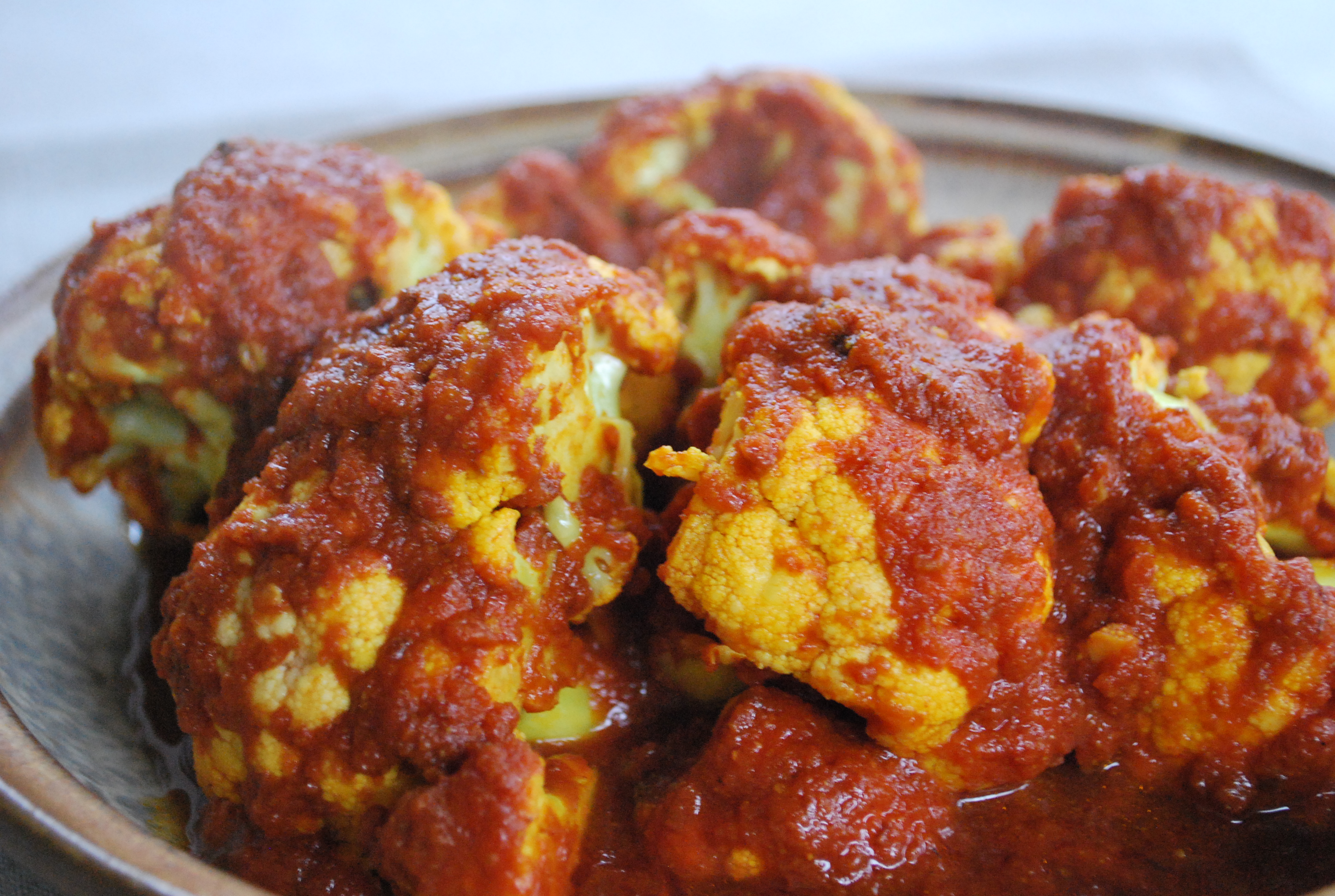
This recipe is from the super-Vij of Vancouver fame. He just came out with a new cookbook called Vij’s At Home: Relax, Honey. So tonight dinner featured Spicy Cauliflower Steak and Mung Beans in Coconut Curry. They were a great combo with brown rice as the neutral grounding force but I would put an emphasis on “spicy” in spicy cauliflower steaks. The heat in this recipe builds so hold off on the cayenne if you want it a little more tame. Or just beware of how much sauce you serve up, or serve the dish with a little non-vegan raita on the side. It’s all good.
1 head cauliflower, outside stalks cut off
1/2 cup olive oil
1 1/2 cups puréed or crushed canned tomatoes
1 tbsp finely chopped ginger
1 1/2 tsp salt
1 tsp turmeric
1 tbsp ground cumin
1 tbsp ground coriander
1 tsp ground cayenne pepper
10 cloves
3-inch cinnamon stick
Cut cauliflower, as you would a pie, into 6 pieces if it’s a smaller head and 8 pieces if it’s a larger one. Wash and carefully place large cauliflower pieces in a colander to drain.
Combine oil and tomatoes in a large wide pot on medium-high heat. Add ginger, salt, turmeric, cumin, coriander, cayenne, cloves and cinnamon, stir well and saute for 3 to 4 minutes, or until oil glistens from tomatoes.
Reduce the heat to low while you mix in cauliflower. Carefully place each large piece of cauliflower into the pot and gently stir so that the tomato masala covers all the pieces. If necessary, use a large spoon to ladle tomato masala into the nooks and crannies of the cauliflower pieces.
Increase the heat to medium, cover and cook for 8 to 10 minutes, stirring once halfway through. When you stir, if you notice that the cauliflower isn’t cooking, increase the heat. If it’s sticking to the bottom of the pot, decrease the heat. Pierce one of the larger pieces with a knife to see if it is soft. if necessary, cook cauliflower, covered, for another 1 to 2 minutes.
mung beans in coconut curry
March 13, 2011
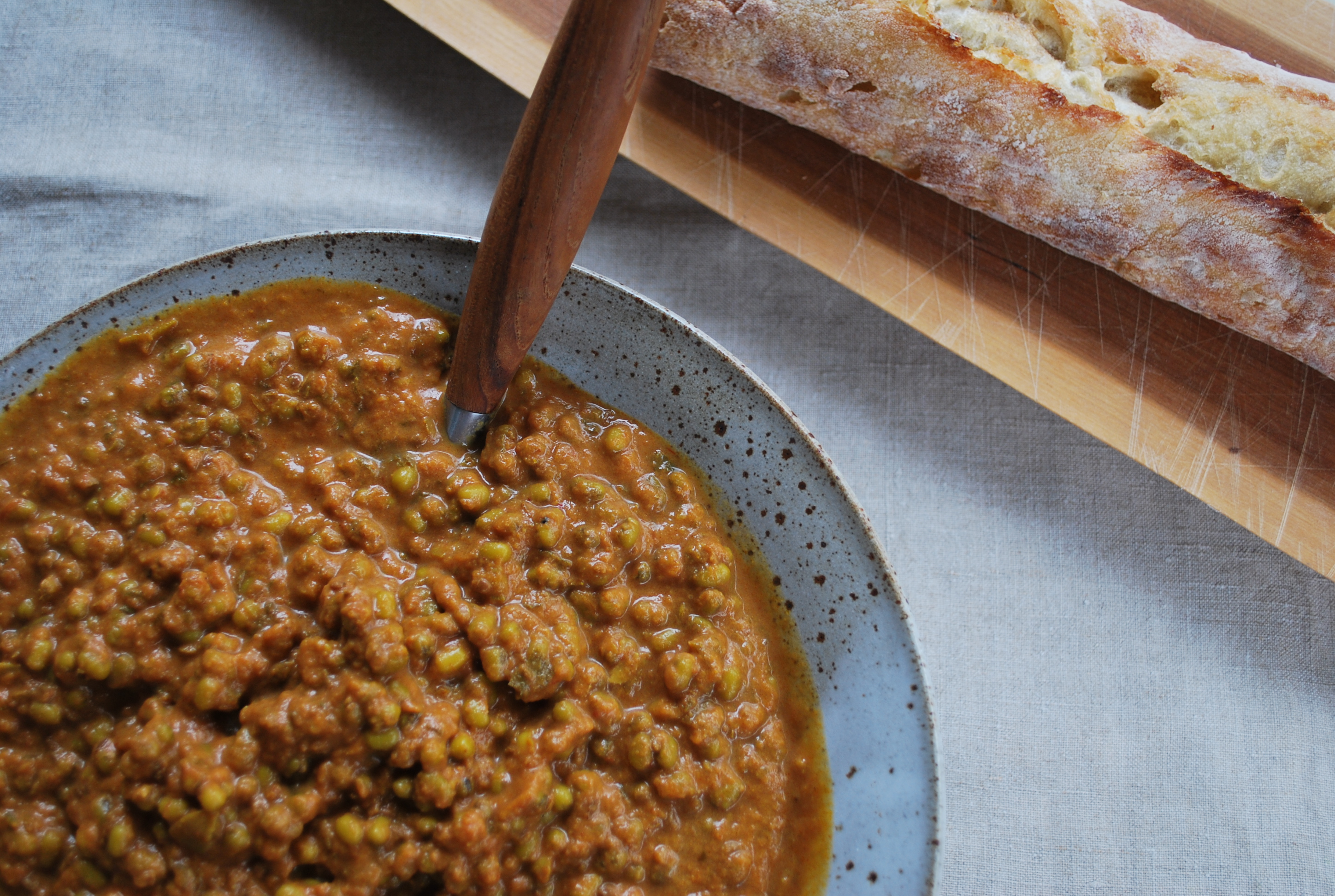
The Mung bean, also known as green bean, choroko in Swahili, mung, mongo, moong, moogor moog dal, mash bean, munggo or monggo, green gram, golden gram, and green soy, is the seed of vigna radiata, which is native to Bangladesh, India, and Pakistan. Whatever name you want to give this little green bean, it packs a nutritional punch of iron, protein, Vitamin C, and tonnes of other life-supporting things. And it’s one of the most cherished foods in ayurveda believed to balance all three doshas. Who can argue with that?
This recipe is from Vij’s new cookbook: Vij’s At Home: Relax, Honey. Love the subtitle. Love the recipe. Serve it with Spicy Cauliflower Steaks and – presto – you’ve got Saturday night dinner relaxing in front of the fire on a drizzly almost-ides-of-March.
1 cup mung beans
1/3 cup olive oil
1 tbsp cumin seeds
3 tbsps chopped garlic
2 cups puréed tomatoes
2 tbsps chopped ginger
2 tbsps ground coriander
1 tsp turmeric
2 tsp salt
1/2 tbsp crushed cayenne pepper
3 cups of water
2 cups coconut milk
1/2 cup chopped cilantro
Wash and drain mung beans and set aside.
Heat oil in a medium pot on medium-high for 1 minute. Add cumin seeds and allow them to sizzle for 45 seconds, or until they are a darker brown. Add garlic and sauté for 3 to 4 minutes, until brown but not burned. Stir in tomatoes, then add ginger, coriander, turmeric, salt and cayenne. Stir and sauté masala for 5 minutes, or until oil glistens. Add water and mung beans, bring to a boil, then reduce the heat to low, cover and cook for 30 minutes, stirring once or twice. Taste beans to make sure they are cooked (I reduced the amount of water needed; if the mixture is drying out and you need more simply add 1/2 cup at a time).
Stir in coconut milk and increase the heat to medium-high. Bring to a boil and turn off the heat (if you want to thicken your curry some more, you can let it simmer on medium-low heat for 5 to 10 minutes). Stir in cilantro and serve.
hey dilly dilly potato salad
March 12, 2011

I made this the other night with the hope that I would have enough left over the next day so I could take a nice photo and post it on v:gourmet. But, alas, the potato pigs in the house hoovered it down and it was gone before I could steal some away from the table. I’ve been dreaming about it all week and decided to make twice as much today since I know, once again, it will be hoovered. You can half the recipe below if you think that’s necessary but I wouldn’t. Have I ever mentioned who needs meat when you’ve got salad like this?
4 lbs mini red potatoes, quartered
6 cobs of corn, shucked
1/4 cup olive oil
8 green onions, chopped
1 large shallot, chopped
1/2 cup sherry vinegar
5 tsps dijon a l’ancienne
1 tsp sea salt
1/2 tsp fresh ground pepper
a whole bunch of dill, chopped
Boil potatoes in salted water under tender. Toss corn cobs in a little olive oil and salt and grill until nicely browned.
Meanwhile, chop shallots and soak in the sherry vinegar to make them tender and sweet. Chop green onion and dill and set aside. Once the corn is done, slice the niblets off the cob. In a large bowl, combine niblets, potatoes, olive oil, green onion, dill, sherry vinegar and shallots, dijon, salt and pepper and toss. Serve immediately and watch it get hoovered.
 v:gourmet