sweet potato chili
November 3, 2011
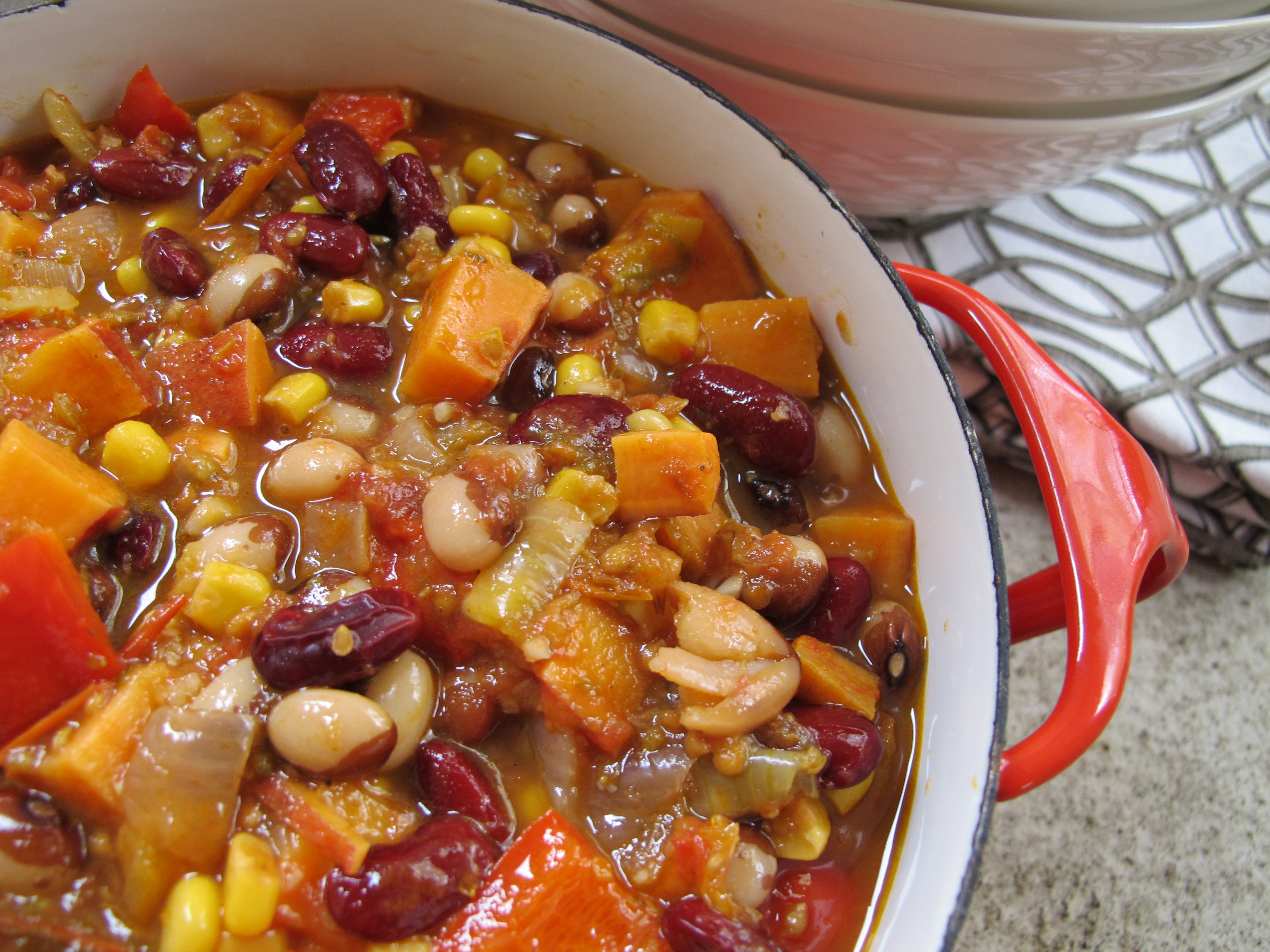
Last week I saw 3 or 4 different recipes for sweet potato chili in different places. Weird but wonderful. I decided to shamelessly follow the trend and post my own. Sweet potatoes go over big in our house, and as we head into the depths of fall, it’s always good to have a recipe on hand that can warm the heart and brighten up even the darkest of November nights. And don’t be jealous of my authentic vintage red Dansk dish, this chili looks good in any pot especially with a healthy garnish of cilantro and green onion.
2 tbsps olive oil
1 large onion, chopped
2 red peppers, chopped
1 full bulb garlic (about 8 cloves), minced
1 tbsp cumin seeds
1 tbsp chili powder
1 tbsp dried oregano
1 1/2 cups corn (fresh or canned)
1 cup kidney beans, cooked
1 cup black or funky heritage beans, cooked
4 cups stewed tomatoes
some slow-roasted tomatoes if you have them
1 sweet potato, chopped
sea salt and pepper
cilantro, chopped
green onion, chopped
Heat the oil in a heavy pot or dutch oven over medium-high heat. Add onions and peppers and saute for about 8 minutes until they turn soft and brown. Stir in the garlic and spices. Reduce the heat and cook until everything turns fragrant, about 2 or 3 minutes but be careful not to burn the spices. Stir in the corn, beans, stewed tomatoes, sl0w-roasted tomatoes (if you have them, if not don’t worry), and sweet potatoes. Bring to a boil, then reduce heat and let simmer for about 30 minutes until flavours meld and the liquid boils down a bit. Add sea salt and pepper to taste. Serve alone or alongside some rice. Garnish liberally with chopped cilantro and chopped green onion.
curried roasted garlic carrot soup
October 30, 2011

This recipe is from my new friend Ninja, aka Eric Baxter, but mostly just Ninja. I met him at Vicki’s Veggies market stand at the Brickworks farmers’ market. We talked all things garlic, and bacon, and celeriac. He convinced me to buy a 5 pound bag of carrot seconds (you know, the ones that aren’t pristine but still fresh and tasty). I agreed as long as he gave me a soup recipe worthy of the organic vegetables I was buying (he’s a chef you know!). And, you know what? Ninja totally came through for me. He emailed me this insanely good recipe on this auspicious day before Halloween. I’ve made a huge pot and will feed it to the troops tomorrow night before they head out on their trick-or-treating-sugar-bender.
For the roasted garlic:
2 heads garlic, top cut off to expose cloves
olive oil
salt and pepper
Place heads of garlic on a sheet of tinfoil, drizzle with olive oil, season with salt and pepper and bake in a 350 degree oven until soft and starting to brown on top.

For the curry spice:
1 tbsp coriander seed
1 tbsp cumin seed
1 tbsp fennel seed
1 tbsp mustard seed
Combine in a pan and toast, tossing or stirring constantly over med-high heat until fragrant (may smoke a touch). This should take about 2 – 4 minutes. When done, let cool and then grind in a spice grinder or with a mortar and pestle.
For the soup:
2 heads roasted garlic
2 large onions, sliced thinly
5 lbs carrots
2 tbsp curry spice
1 tsp turmeric
2 tbsp olive oil
3-4 litres veggie stock
salt and pepper to taste
In a soup pot over med heat add oil, once hot add onions with a pinch of salt, cook low and slow until caramelized, this should take 25-30 minutes, but it’s worth the time.
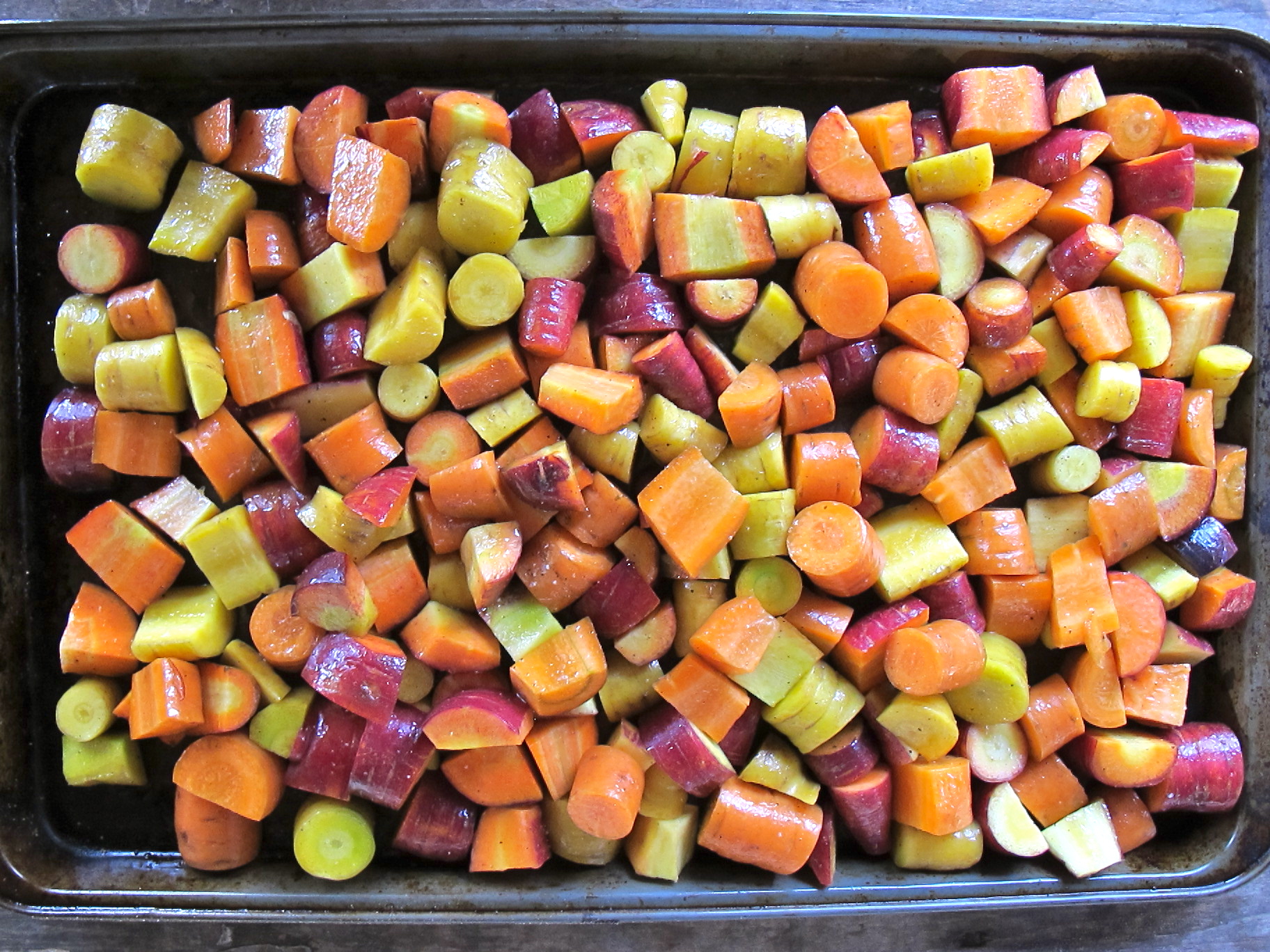
Rough chop carrots, toss in a large bowl with olive oil and light salt and pepper, place on a cookie sheet on parchment paper and roast in a 400 degree oven until slightly caramelized, about 15-20 minutes.
When onions are carmelized add the spices, cook for 1-2 minutes until fragrant, add carrots, and squeeze roasted garlic in, cover with veg stock and simmer until carrots are very soft. Depending on carrots this will vary from 30 minutes to an hour, they should be almost falling apart.
Using a blender (immersion or standard) purée soup. Caution: if you are using a blender take the center piece out of the lid, place lid on firmly and cover with a folded kitchen towel, otherwise the gases cannot expand and you’ll have a terrible, hot mess!
Adjust soup consistency with vegetable stock (or water if you have to), it should be thick but not pile up on itself, season, and garnish with carmelized carrots and olive oil. Enjoy!!!
ratatouille with polenta and rosemary
October 24, 2011

Ratatouille is a traditional French Provençal stewed vegetable dish, originating in Nice. Polenta is known to have been eaten by the Roman legions; known as pulmentum they would eat it in either a porridge or in a hard cake like form. A happy Mediterranean marriage, this recipe brings the two together in a meal that harkens to the good-ole-days when vegetables were fresh, food was simple, and everyone enjoyed the comforts and pleasure of the table with good friends and the gifts of the gods.
Ratatouille
4 large tomatoes
8 large garlic cloves, thinly sliced
1 cup chopped fresh parsley
20 fresh basil leaves, roughly chopped
1 cup plus 2 tablespoons extra-virgin olive oil
2 lb eggplant, cut into 1-inch cubes
2 1/4 teaspoons sea salt
2 large onions, quartered lengthwise and thinly sliced crosswise
3 red bell peppers, cut into 1-inch pieces
4 medium zucchini, cut into chunks
1/2 teaspoon black pepper
Cut an X in bottom of each tomato with a sharp paring knife and blanch together in a 4-quart pot of boiling water 1 minute. Transfer tomatoes with a slotted spoon to a cutting board and, when cool enough to handle, peel off skin, beginning from scored end, with paring knife.
Coarsely chop tomatoes and transfer to a 5-quart heavy pot with garlic, parsley, basil, and 1/3 cup oil. Simmer, partially covered, stirring occasionally, until tomatoes break down and sauce is slightly thickened, about 30 minutes.
While sauce is simmering, toss eggplant with 1/2 teaspoon salt in a large colander and let stand in sink 30 minutes.
Meanwhile, cook onions in 3 tablespoons oil with 1/4 teaspoon salt in a 12-inch heavy skillet over moderate heat, stirring occasionally, until softened, 10 to 12 minutes. Transfer onions with a slotted spoon to a large bowl, then add 3 tablespoons oil to skillet and cook bell peppers with 1/4 teaspoon salt over moderate heat, stirring occasionally, until softened, about 10 minutes. Transfer peppers with slotted spoon to bowl with onions. Add 3 tablespoons oil to skillet and cook zucchini with 1/4 teaspoon salt over moderate heat, stirring occasionally, until just tender, 6 to 8 minutes. Transfer zucchini with slotted spoon to bowl with other vegetables.
While zucchini are cooking, pat eggplant dry with paper towels. Add remaining oil (about 1/4 cup) to skillet and cook eggplant over moderate heat, stirring occasionally, until softened, 10 to 12 minutes.
Add vegetables, remaining teaspoon salt, and black pepper to tomato sauce and simmer, covered, stirring occasionally, until vegetables are very tender, about 1 hour. Cool, uncovered, and serve warm or at room temperature.
Polenta
6 cups water
1 tsp sea salt
2 cups organic corn grits
In a large, deep pan over high heat bring water and sea salt to boil, gradually stir in the polenta. Reduce heat and simmer gently, stirring frequently to prevent sticking until the mixture is very thick (about 30 minutes). Stir in more salt if needed. Oil a square medium-sized pan or loaf pan, spoon in polenta, and let set for 10 minutes. Invert onto a flat plate. The polenta will unmold and hold its shape.
Cut polenta into thick slices and serve hot, smothered in ratatouille and chopped rosemary.
farinata
October 16, 2011
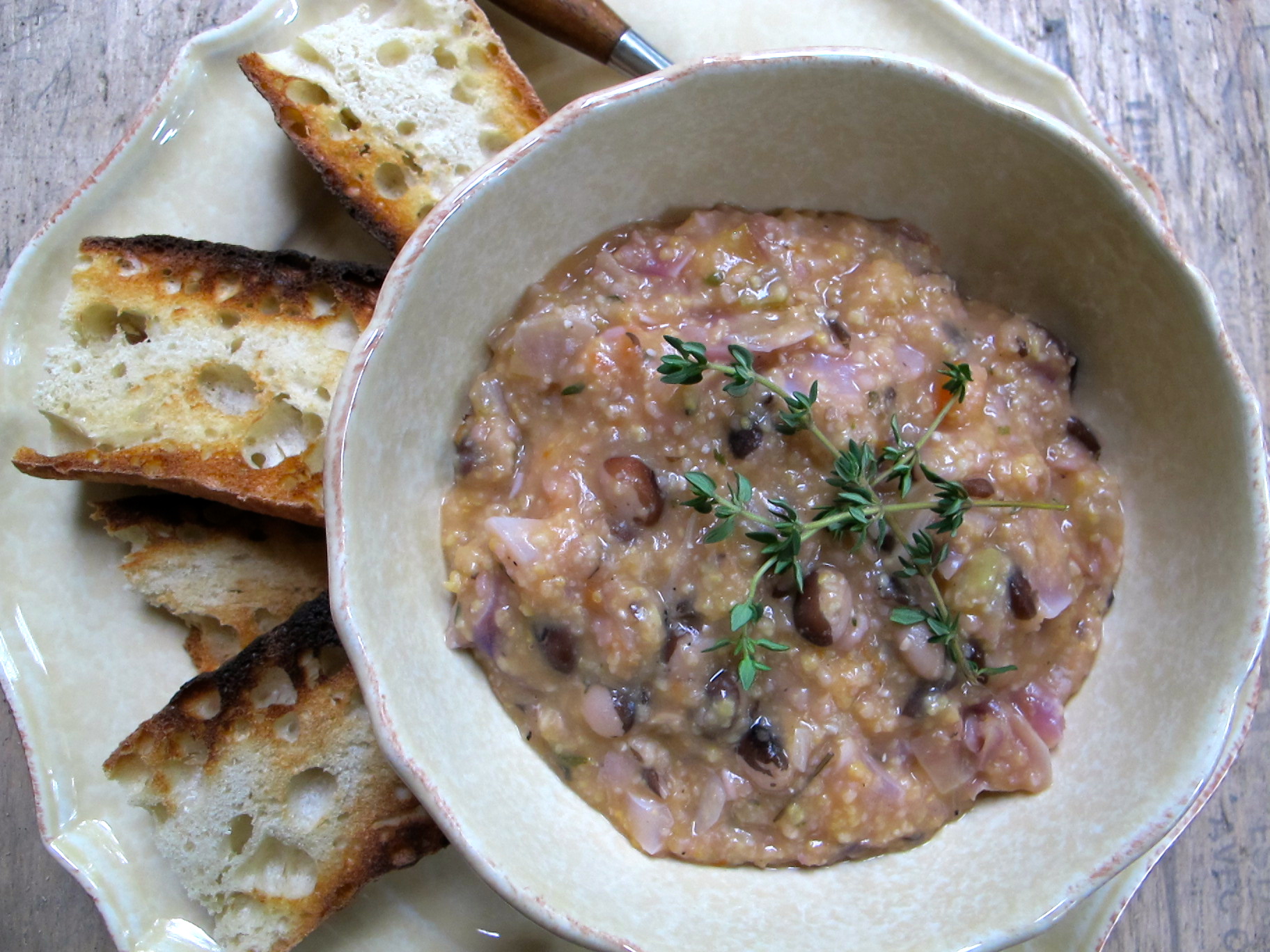
I’m a little confused about what farinata actually is. If you google it, most links lead you to the conclusion that it’s a chickpea flatbread like socca. Yet my new cookbook on Tuscan cooking has it as a stew from Pistoia, a region of Tuscany just west and north of Florence. It doesn’t really matter as recipes are regional by their very nature, and adaptable, and transformable, and personal. So my farinata is a polenta stew – the epitome of peasant, homegrown, comfort food. Picture a little stone house in a Tuscan valley with a small kitchen garden outside full of fall bounty like carrots, cabbage, celery, tomatoes, and herbs. Now add a little wine, a few beans, some polenta and you’ve got a meal that will warm the bellies of the whole family. Cheap. Easy. Filling. Tasty. With leftovers for lunch in the field the next day.
1 1/2 cups dried borlotti beans (or another kind of dried bean), soaked overnight in water to cover, and drained
2 cloves garlic, peeled
2 sage leaves
1 bay leaf
3 1/2 oz cavolo nero cabbage
4 tbsps olive oil
1 carrot, chopped
1/2 celery stalk, chopped
1/2 onion, thinly sliced
2 large ripe tomatoes, chopped
1/2 cup white wine
1 cup dried polenta
chopped herbs including thyme, rosemary, oregano
sea salt and pepper
4 tbsps grated pecorino cheese, optional
Place beans in a large pot with plenty of water, one garlic clove, sage leaves, and bay leaf. Bring to a boil and cook beans until tender, seasoning with salt towards the end of the cooking time (this is important – if you add salt too early your beans won’t cook).
Meanwhile, bring a pot of lightly salted water to boil. Add the cabbage and simmer for about 5 minutes until cabbage is tender. Drain and chop.
Heat olive oil in a heavy dutch oven or large pot and add the onions. Cook until tender. Add carrot, celery, and garlic. Saute until tender. Add tomatoes and chopped herbs. Let simmer for about 3 minutes. Add white wine and let it reduce by about 1/2.
Drain the beans, discard the sage and bay leaves, reserving the cooking liquid. Place half the whole beans in the dutch oven with the other other vegetables. Mash half the beans and garlic clove with a potato masher until they turn into a paste. Add them to the dutch oven along with the cabbage and 2 cups of reserved cooking liquid from the beans.Let simmer for about 20 minutes.
Pour 4 1/2 cups of the rest of the remaining cooking liquid into the dutch oven. Season with salt and pepper and then sprinkle in the polenta. Cook, stirring regularly and adding more cooking liquid or water if necessary, for 40 minutes, until thickened and cooked through.
If you want to make this farinata true Tuscan style, stir in 4 tbsps grated pecorino cheese. Either way, ladle into bowls and serve with crunchy artisanal toast and a glass of wine from the region.
roasted chickpeas with paprika rosemary and thyme
October 15, 2011

I think everyone understands the 3:00 PM energy crash. If you eat well it’s not as severe but, regardless, I think we all need a little pick-me-up mid-afternoon whether it’s a fabulous tea, smokey honey roasted almonds, or these amazing roasted chickpeas with paprika, rosemary, and thyme. The recipe hails from Heidi Swanson’s super natural every day complete with a few tips like making sure your chickpeas are as dry as possible before roasting, using three paprikas for depth of flavour, and adding these tasty morsels to stir-fries, soup, and salads. I’m not sure mine will last until dinner as I’ve eaten half the bowl just sitting here writing this blog post.
3 cups of cooked chickpeas or 1 1/2 cans of chickpeas rinsed and dried
2 tbsp extra-virgin olive oil
1 1/2 teaspoons smoked paprika
1 1/2 teaspoons sweet paprika
1 1/2 teaspoons hot paprika
1/2 teaspoon fine-grain sea salt
Grated zest of 1 lemon
1 teaspoon chopped fresh rosemary
1 teaspoon chopped fresh thyme
Preheat oven to 425 with a rack placed in the top third of the oven. Put the dried chickpeas onto a baking sheet as pictured below and roast for 10 minutes. Shake the pan and roast for another 8-10 minutes, until the chickpeas crisp up. Keep an eye on them to avoid burning.
While chickpeas are cooking, make your sauce. Combine olive oil, paprikas, salt, lemon zest, rosemary and thyme into a mixing bowl.
breakfast quinoa with lemon zest and poppy seeds
September 26, 2011
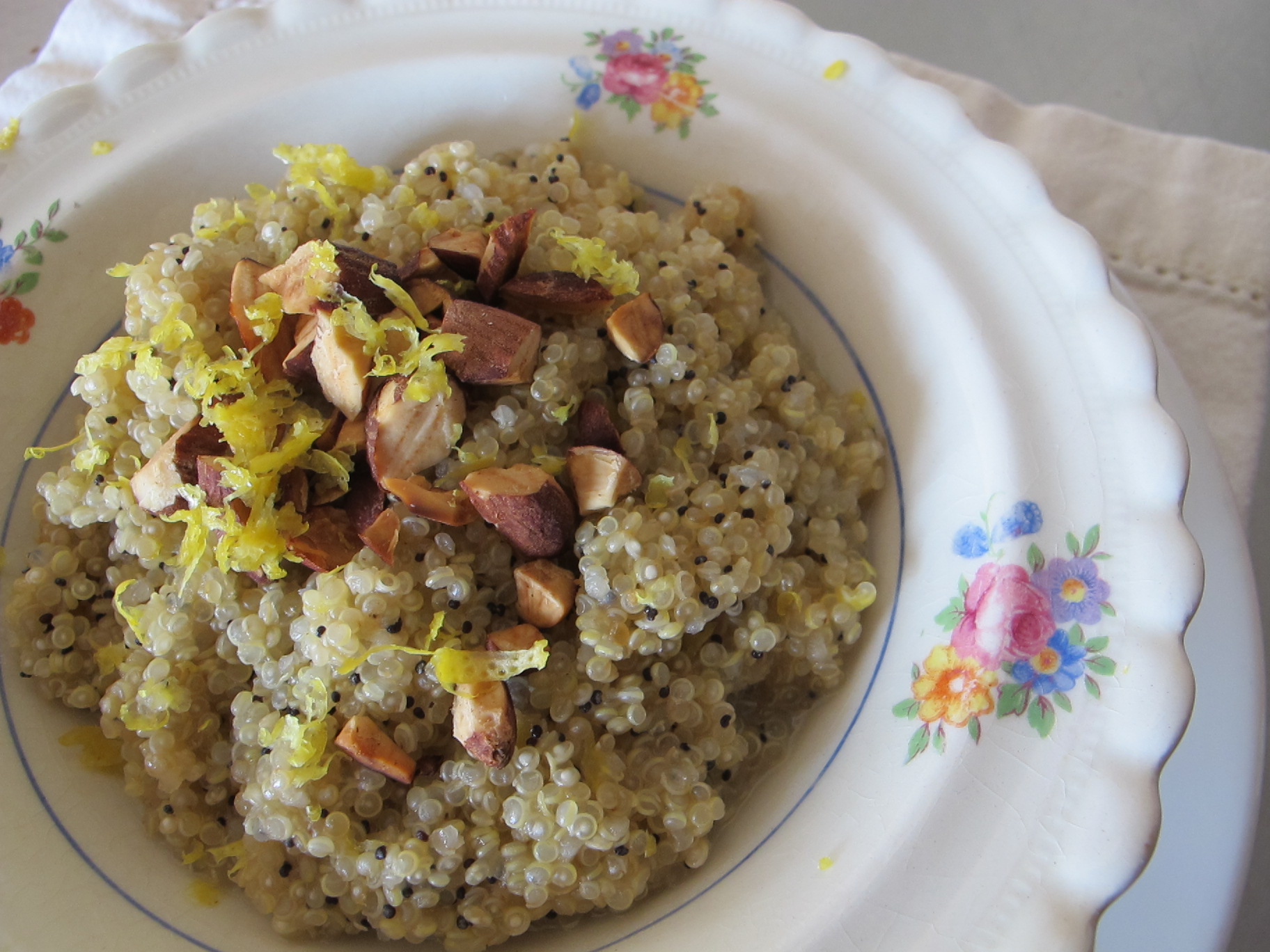
I was chatting with my new friend and colleague, Meaghan Calcari from San Francisco, and she mentioned that she has quinoa every morning for breakfast. Don’t get me wrong – I love my dulse in the morning and will stick with it – but I thought for a change it might be nice to try something different. So taking my inspiration from Meaghan I cooked some up this morning topped with maple syrup, and toasted almonds. You could also add dried cranberries, and a dusting of cinnamon. This super-food is super yummy!
Super-food? For those of you that don’t know, quinoa (pronounced keen-wah) is really the superhero of grains. Actually, technically it’s not a grain but the seed of the Goosefoot plant. It’s used as a grain and substituted for grains because of its grain-like characteristics. The Inca have cultivated it in the South American Andes since, oh, about 3,000 B.C. In fact the ancient Incas called quinoa the “mother grain” and revered it as sacred. That alone makes it a super-food, but alongside being sacred it’s easy to prepare, has a great nutty flavour, and is packed full of protein, amino acids, calcium and iron. Need I say more? Eat up!
1/2 cup coconut milk
about 1 cup water
1 cup quinoa
1/2 tsp. fine-grain sea salt
1 1/2 tsp. poppy seeds
grated zest of 1 lemon
1 1/2 tbsp. maple syrup or to taste
1/3 cup sliced almonds, toasted
dried cranberries
In a medium saucepan over medium heat, bring the coconut milk, water, and quinoa to a boil. Turn down the heat and simmer the mixture, stirring often, for 5 to 20 minutes, or until the quinoa is creamy but still retains some texture. If the liquid in the pan is absorbed before the quinoa has fully cooked, stir in more water, 1 tbsp or so at a time, until done. Stir in the poppy seeds, lemon zest, and maple syrup. Serve hot in individual bowls topped with the toasted almonds. Serves 4.
lemon poppyseed cake
September 17, 2011
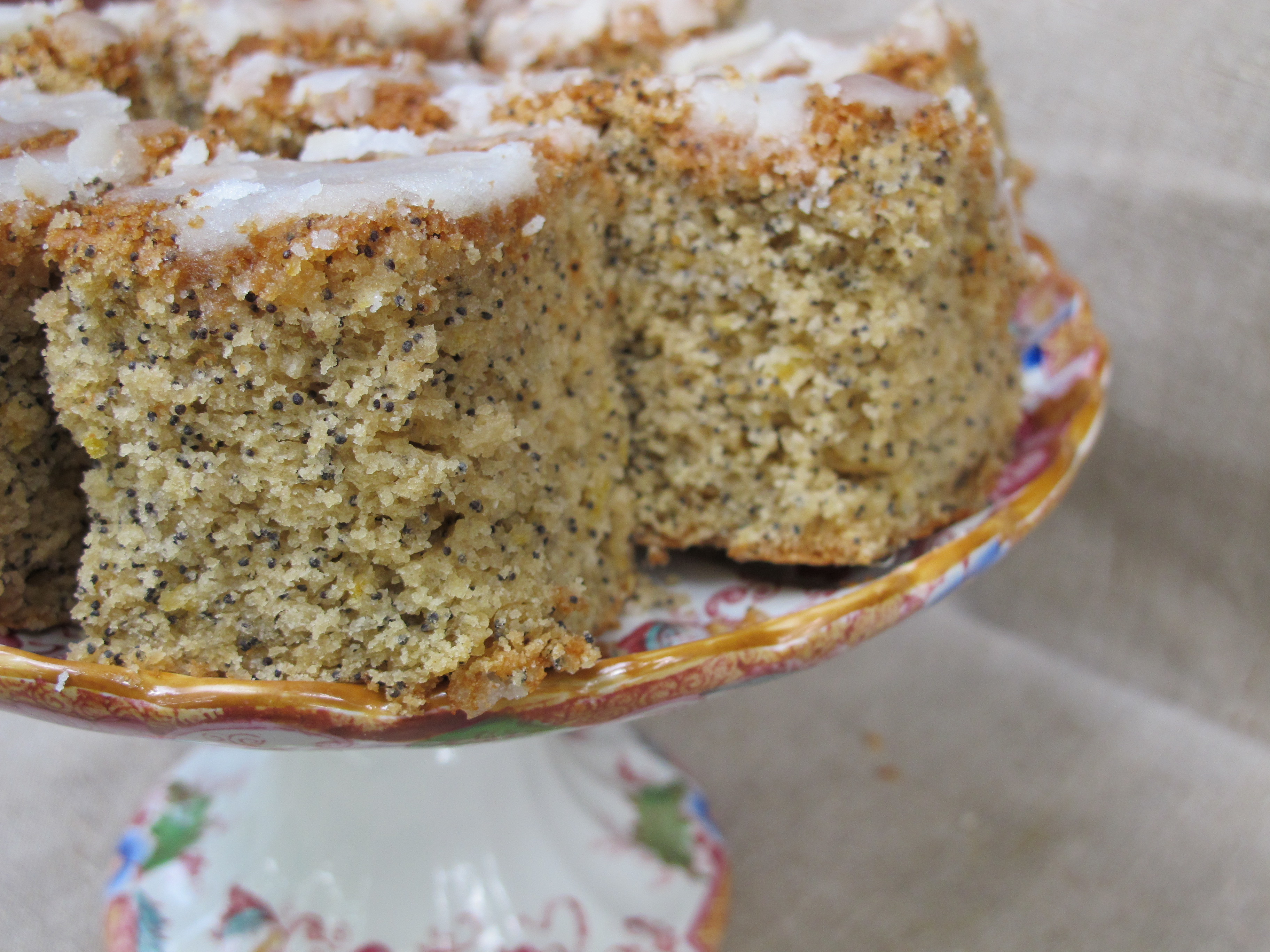
Breakthrough!!! I’ve found vegan baking a little difficult. It’s been the one transition that’s been harder than the rest. I guess it’s because when you are brought up in a house with a mother, grandmother, aunts, and sisters who are all super-bakers of the egg, butter, and sugar sort, it’s a big shift to coconut oil and xantham gum. But yesterday I was wanting to make a special cake for a special baby shower and opened up Angelica’s Home Kitchen from the Big Apple and found this fantabulous lemon poppyseed cake. And it worked. And it was delicious. And it was full of super foods like poppyseeds and maple syrup. And I ate it last night as dessert. And I ate it this morning as breakfast. And everyone loves it. Crumbs and all. So mark this day, this 17th day of September 2011, as my v:baking breakthrough day and celebrate by pulling out your mixing bowls. Turn on that oven, get out that loaf pan, and bake away.
2 cups pastry flour
2 cups all-purpose flour
1 tbsp plus 1 tsp baking powder
2 tsps baking soda
1/3 cup poppy seeds
1 tsp sea salt
1/2 cup lemon juice (juice from approx 2 lemons)
1/3 cup water
1 cup apple cider or apple juice
1 2/3 cups maple syrup
2/3 cup olive oil or sunflower oil
2 tsps vanilla extract
4 tbsps lemon zest (zest from approx 2 lemons)
1 cup super fine sugar
Juice from 1 lemon
Preheat the oven to 350 degrees. Lightly brush 8 x 12 baking pan with oil. Add several tablespoons of flour and shake to coat evenly. Invert pans and knock against the counter to rid them of excess flour.
Whisk the flour, baking power, baking soda, salt, and poppy seeds together in a medium-size mixing bowl. In a separate bowl, whisk together the lemon and apple juices, maple syrup, oil, vanilla, and zest. Using a wooden spoon, stir the wet mixture into the dry to form a batter. Do not overmix. Transfer batter to the baking pan and bake on the middle rack of the oven for 25 minutes or until a toothpick comes out clean. Cool for 30 minutes before removing.
Meanwhile, mix together the super fine sugar and lemon juice. Once cake is removed from the pan, place on a serving dish and drizzle with the lemon sugar icing.
pappa al pomodoro
August 22, 2011

Pappa al pomodoro is a perhaps the mother of all rustic peasant soups. Once considered the soup of the poor in Tuscany, the ingredients are elemental, most would have been found in the garden, and it boasts a good serving of stale bread to make it thick, filling, and satisfying. So why me? Well, the kids are at camp so we have nothing but stale bread in the kitchen, except for a handful of fabulous looking heirloom tomatoes from the farmers’ market that needed to be consumed. I have a little basil in the garden and lots and lots of garlic so it was a no-brainer. And turned out to be a good-brainer because it was so ridiculously delicious we couldn’t stop eating it. Those Tuscans had a thing or two figured out!

1 kg or about 6 large fresh heirloom tomatoes, different shapes, colours, sizes, chopped
3 garlic cloves, minced
a handful of fresh basil leaves, chopped
1 litre veggie stock
4 slices stale bread, chopped
4 tbsps olive oil
sea salt and pepper
Wash tomatoes and chop them coursely. Peel and mince garlic. Wash and chop basil. Chop bread slices into cubes.
Heat olive oil in a heavy-bottom pot or dutch oven. Saute garlic until it’s fragrant but not brown. Add chopped tomatoes and basil and let simmer for 5 minutes or so. Add vegetable stock and bread, bring to a boil, and then let simmer for 30 minutes. The bread will break down and become one with the tomatoes and stock. Season with salt and pepper to taste. Serve hot with a good chunk of warm, hearty bread.
PS The authentic version of pappa al pomodoro calls for unsalted, white, Tuscan bread. All we had was a stale olive boule from St. John’s Bakery. Go with what you’ve got and don’t be afraid to improvise.
veggie pâté
August 9, 2011

This was a hard-fought recipe folks. Not sure why but success on the veggie pâté front eluded me until today. I guess good things come to those that wait or persevere or try try again or something. My sister sent me a recipe from a Renée Frappier, a well-known, very active vegetarian guru and nutritionist in Quebec. The recipe below is a variation of hers as I tend to fiddle with ingredients and ratios. It’s chock-a-block full of good things and the flavours meld beautifully. And it’s spreadable so it’s the perfect thing on crackers, pita crisps, or hearty whole-grain toast. It’s almost as good as the veggie pâté I bought in the little market in Tofino. By the way, if anyone knows the guy that makes that pâté, can you tackle him for me and get the recipe? I’d love to compare and contrast.
1 cup sunflower seeds
1/2 cup whole wheat flour
1/2 cup nutritional yeast
1/2 teaspoon salt
1/2 cup canola oil
2 tablespoons lemon juice
1 potato, peeled and chopped
1 large carrot, peeled and sliced
1 onion, peeled and chopped
1 stalk celery, chopped
2 cloves garlic, peeled
1 1/4 cups water
4 tbsps tamari
1/2 teaspoon thyme
1/2 teaspoon basil
1/2 teaspoon sage
1/2 teaspoon savory
1/2 teaspoon ground black pepper
1/2 teaspoon ground dry mustard
Preheat oven to 350 F. Lightly grease an 8×8 inch baking dish. In a food processor, blend all the ingredients until they are almost smooth. Transfer mixture to the baking dish. Bake for 1.5 hours, or until lightly browned.
sweet potato fritters
August 7, 2011
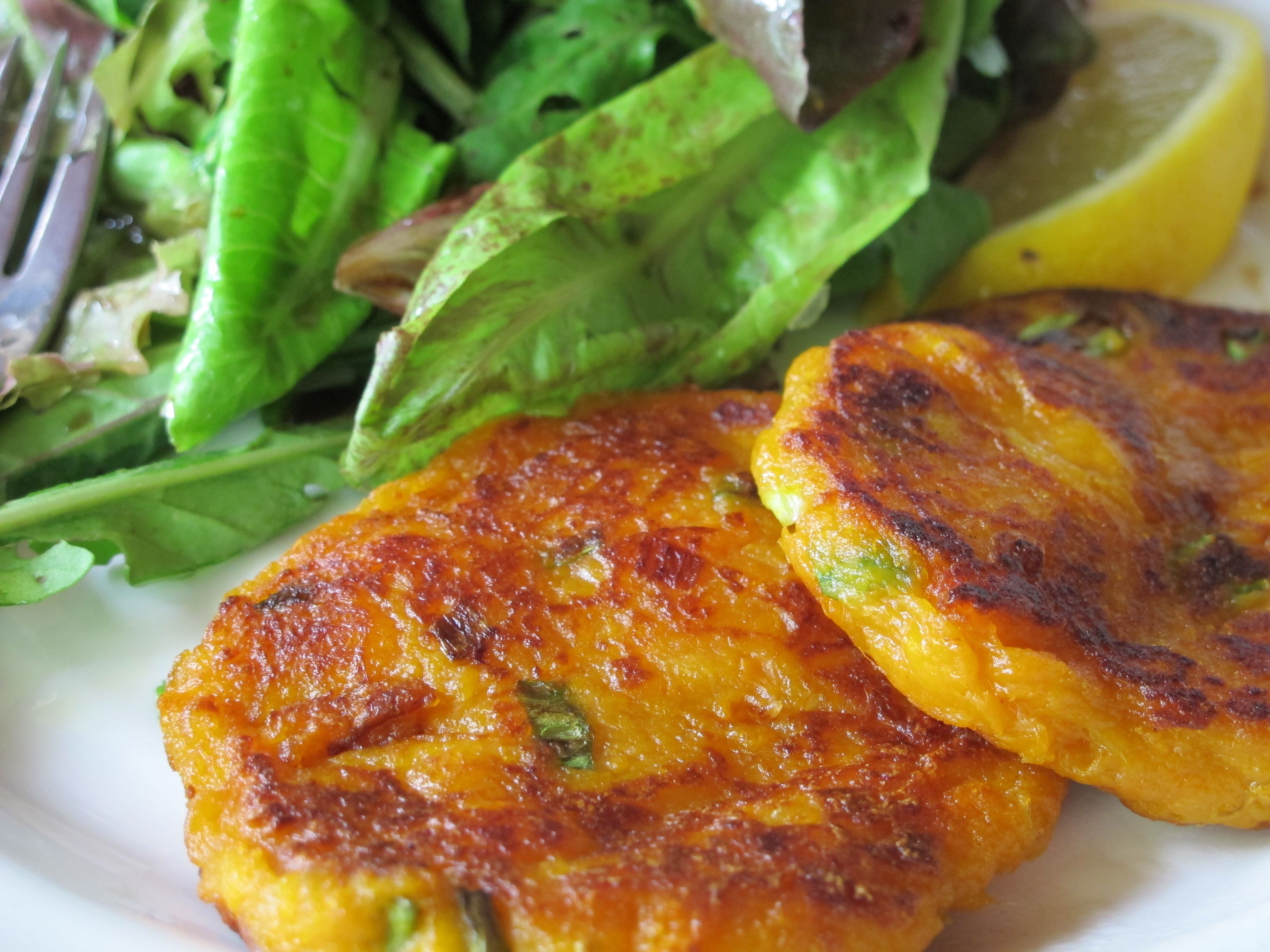
I don’t think I’ve met a sweet potato that I didn’t like and these ones are no exception. The recipe comes from Ottolenghi’s Plenty in which he suggests you serve them with a little yogurt sauce on the side. Could do. I’m sure it would be delicious in a non-vegan kind of way. But they were just as good with a crisp green salad and a little twist of lemon juice. The perfect summer lunch.
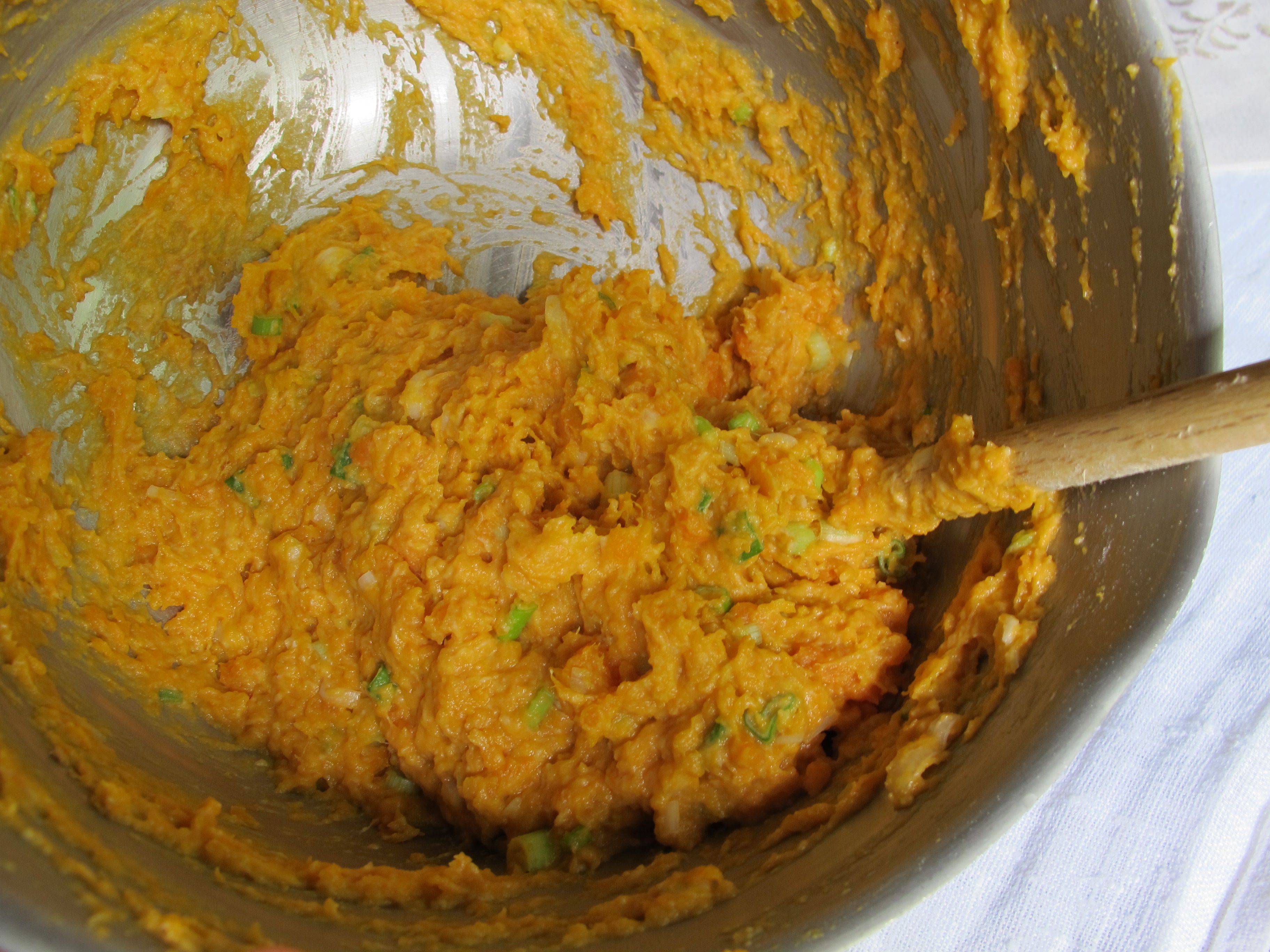
2.5 pounds sweet potatoes, peeled and cut into large chunks (about 5 medium sized sweet potatoes)
2 tsp soy sauce
3/4 cup flour
1 tsp salt
½ tsp sugar
3 tbsp spring onion, chopped
½ tsp fresh chilli, finely chopped (or more, to taste)
oil for frying
Steam the sweet potato until soft, then drain in a colander for an hour. Meanwhile, whisk the sauce ingredients until smooth and set aside. In a mixing bowl, work all the fritter ingredients by hand – it should be sticky, so if it’s a little runny, add some flour. Do not over-mix.
To cook the fritters, heat some oil in a nonstick frying pan on medium heat and cook the fritters in dollops of about 3 tablespoons of the batter. Use the back of the spoon to flatter them out a bit. Fry for about 6 minutes each side. You want them to go really brown – don’t worry if they burn a little, it will just add to the flavour. Sit cooked fritters on paper towel to soak up excess oil. You can keep them warm in the oven while you finish the other fritters.
 v:gourmet
