chickpea kale feta salad
March 16, 2013

I have oft said that there is an exception to every rule. This is a vegan blog and so it is, naturally, dairy-free. But I do make one exception and that’s feta from Ruth Klassen of Monteforte Dairy. It’s local, and lovingly produced by a dedicated and passionate woman whom I see every Saturday at the farmer’s market. I love what she does and what she stands for – at Monteforte “we’re convinced the small things do indeed make a difference, that agriculture is best practiced on a human scale, and that our cheeses, each in its own way, reflect something a little deeper than the technology behind mass manufactured food – a little of the poetry and passion of life itself.” How can you argue with that? And her feta is to die for. If you are a stalwart vegan and just can’t go there, you can always replace dairy-based feta with a soy-based “feta” or herbed tofu as I prefer to call it. Whichever way you go, it’s a great compliment to this salad of chickpeas, wilted kale, and basil. Serve it next to the French Bean Salad and you’ve got a killer lunch.
3 cups cooked chickpeas
1/2 pound baby kale, wilted
1/2 red onion cut into small slices
1 small bunch fresh basil, chopped finely
chunk of feta, crumbed, or a healthy dose of herbed tofu
1/4 cup olive oil
3 tbsps balsamic vinegar
juice from 1/2 lemon
sea salt and pepper to taste
Cooked your chickpeas, drain, and put into a large mixing bowl. Or if you are using canned chickpeas, rinse, drain, and put into a large mixing bowl.
Wilt the kale in a pot of boiling water for 1 or 2 minutes, or in a large skillet over medium high heat. Add to the chickpeas when done.
Add red onion, chopped basil, feta or herbed tofu. Add olive oil, balsamic and lemon juice. Mix well. Add sea salt and pepper to taste. Adjust seasoning, including lemon juice, balsamic, or any other ingredient, as necessary. Serve. Serve seconds. Lick your chomps. And be grateful for simple, beautiful salads.
french bean salad with mustard tarragon & shallots
March 16, 2013

Who knew tarragon and celery seed were such good friends? They come together beautifully and freshly in this french bean salad. In fact they sing out loud, while the other ingredients – stalwart dijon, sophisticated sherry vinegar, and trusty olive oil – provide back-up and support the whole act. It’s a delicious lunch salad next to a chickpea kale and feta salad. And, to boot, this salad gives you a little hit of nature’s medicine. Tarragon is known to prevent cardiovascular disease. And celery seed? Aulus Cornelius Celsus was talking about using these tiniest of seeds for pain relief way back in 30 AD.

1 pound french green beans, “tipped and tailed” or just “tipped”
1/4 cup sherry vinegar
3 shallots, diced finely
1 tsp mustard seed
1 tsp celery seed
2 tbsps dijon mustard
1/2 cup olive oil
1 1/2 tbsps fresh tarragon, chopped finely
sea salt

Bring a large pot of salted water to a rolling boil. Once the water has reached boiling point, turn the heat down slightly and blanch french beans in the water for 4 – 5 minutes until just tender. Remove beans immediately and give them a bath in iced water to stop the cooking process and lock in their bright green colour. Drain and set aside.
Meanwhile, add finely diced shallots to the sherry vinegar and let sit for 10 minutes.
Crush the celery and mustard seeds with a mortar and pestle. Set aside.
Add dijon mustard to the sherry vinegar and whisk until well blended. Slowly add the olive oil, whisking as you go to make sure the mixture combines well and reaches a creamy consistency. Once mixed well, add crushed celery and mustard seeds, chopped tarragon, and sea salt to taste.
Toss dressing with the blanched green beans. Adjust seasoning if necessary. Serve as a light lunch or as a wonderful side to any french-leaning dinner.
chocolate sea salt tart
March 10, 2013
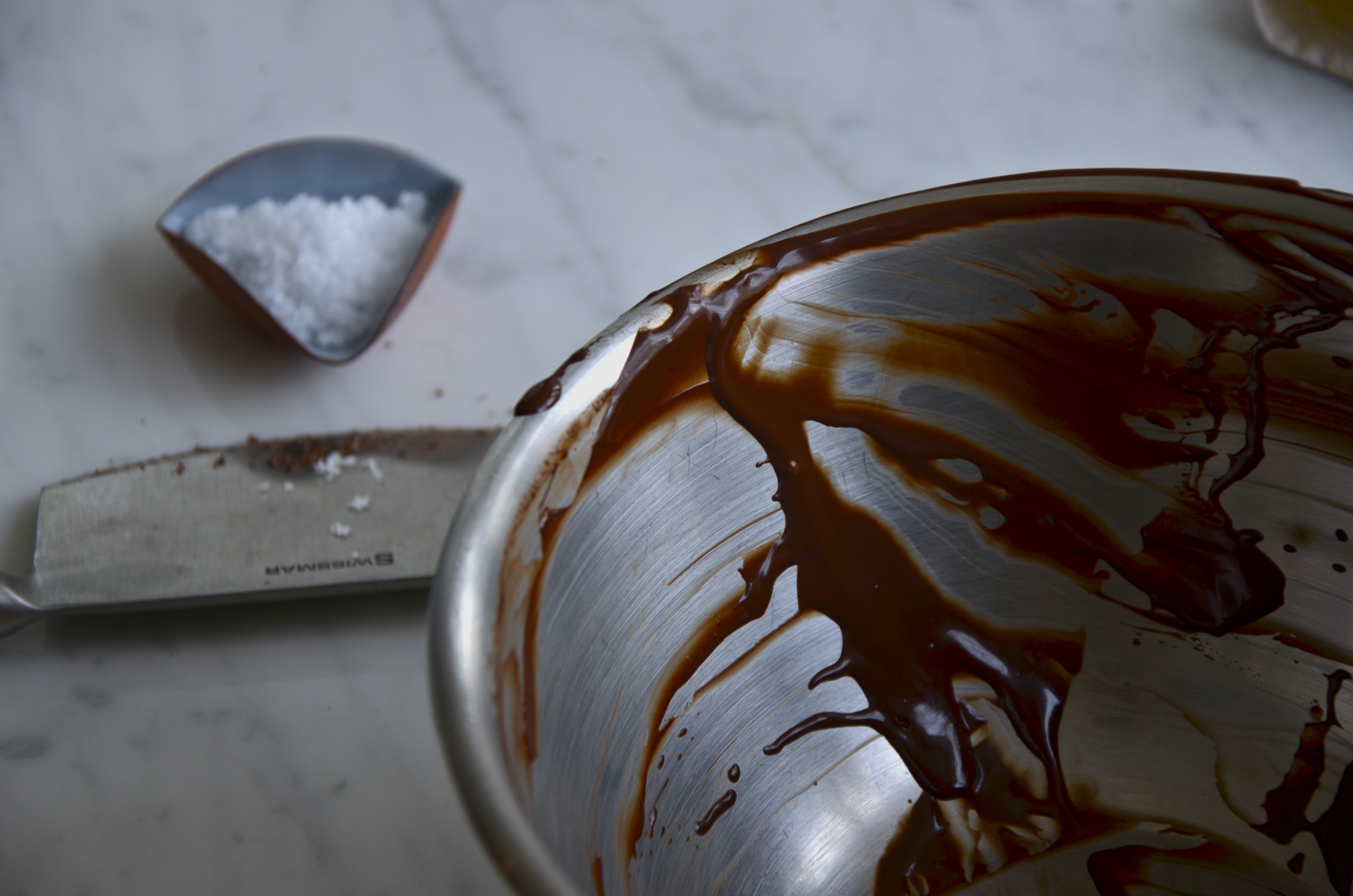
Did you know that chocolate is considered a brain stimulator and cough preventor, and that it has anti-diarrhoeal and anticancer agents? Some also say that it’s an aphrodisiac. The Aztecs and Maya must have know all of this as they have been using chocolate in food and drinks since about 1100 B.C. Chocolate played a special role in both Maya and Aztec royal and religious events offering chocolate to the deities and serving chocolate drinks during sacred ceremonies.
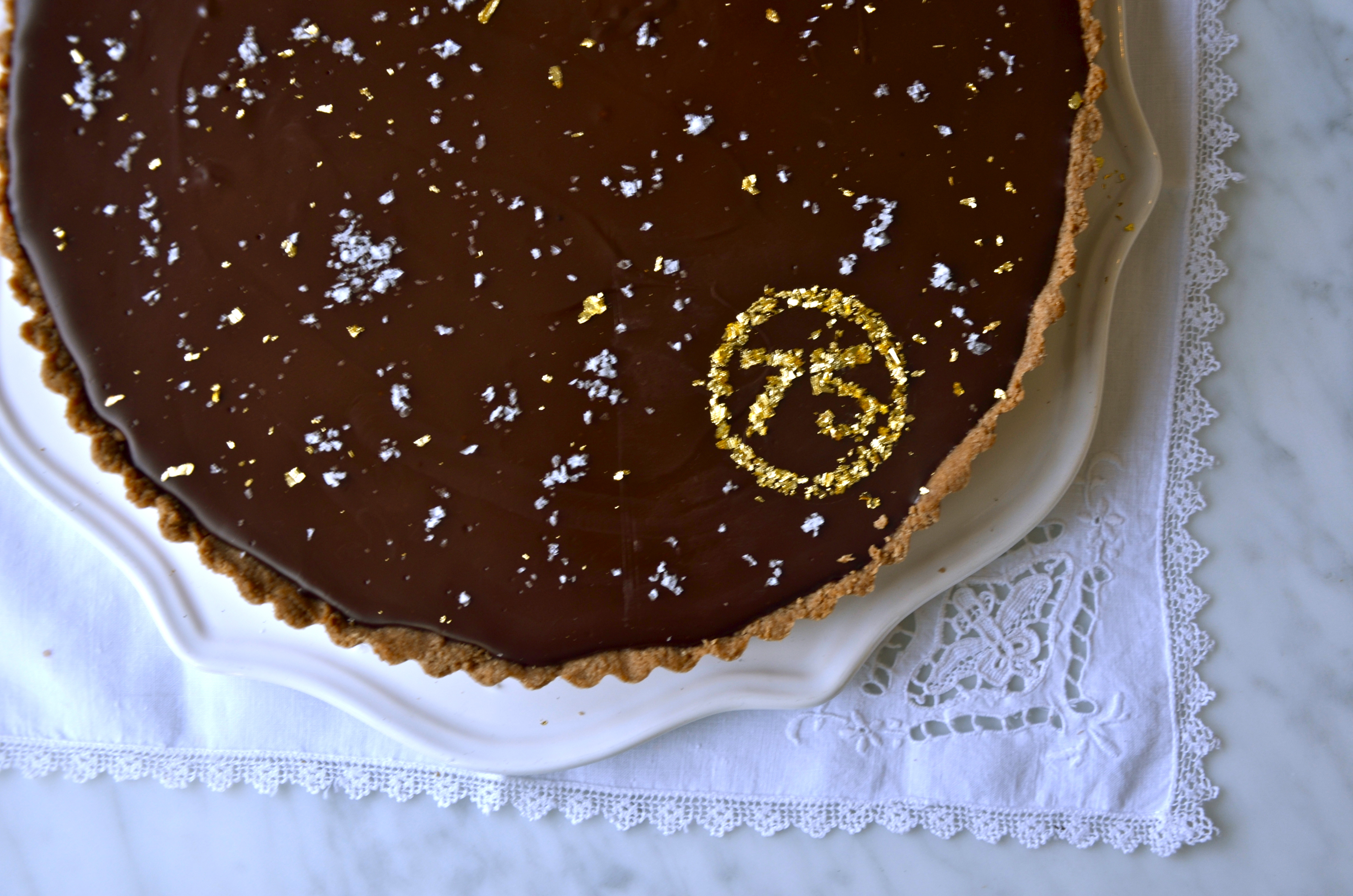
That’s what we did last night for my mom’s 75th birthday – well, the serving chocolate at a ceremony; not the offering chocolate to the deities. Although we probably should have because it was so delicious and rich and other-worldly. I found this recipe in Joseph Shuldiner’s Pure Vegan cookbook – it calls for lots of good quality chocolate and packs a massive punch. Beware, this is more like a truffle than a torte so cut very thin slices and feed the masses. It goes a long way and puts a satisfied smile on each and every face.
Cocoa Tart Shell
1 1/2 cups all-purpose flour
1/2 cup powdered sugar
2 tbsps cocoa powder
1/4 tsp salt
1/2 cup cold vegan shortening, diced
1 – 3 tbsps ice water or more as needed
Filling
1 1/4 pounds good quality dark chocolate, coarsely chopped, including some espresso chocolate if you can find it
2 1/2 cups unsweetened plain soymilk
1 tsp salt
Fleur de sel for garnish
Preheat oven to 350 degrees.
In a food processor, combine the flour, powdered sugar, cocoa powder, salt and shortening and pulse until the mixture is evenly blended. Add the water 1 tablespoon at a time while continuing to pulse. Stop as soon as the dough starts to come together. Test by pinching a bit of the dough with your fingers. If it sticks together, it’s ready. If not, add more water.
Transfer the dough directly into a 9-inch tart pan and gently press it into the pan. Begin by building up the sides to form a 1/4 inch thick wall of dough. Then distribute the remaining dough evenly over the bottom of the pan and press firmly so the dough is packed down. Prick the bottom of the tart shell with a fork 12 to 15 times to prevent the crust from puffing up during baking. Cover the crust with a clean tea towel and refrigerate for 15 minutes.
Line the tart shell with parchment paper and spread pie weights or dried beans over the paper, pushing the bulk of the weights to the edges of the shell. Bake for 20 minutes. Remove the weights and bake for 4 to 5 minutes, until the bottom of the shell is firm and dry. Remove from the oven and let rest while you prepare the filling.
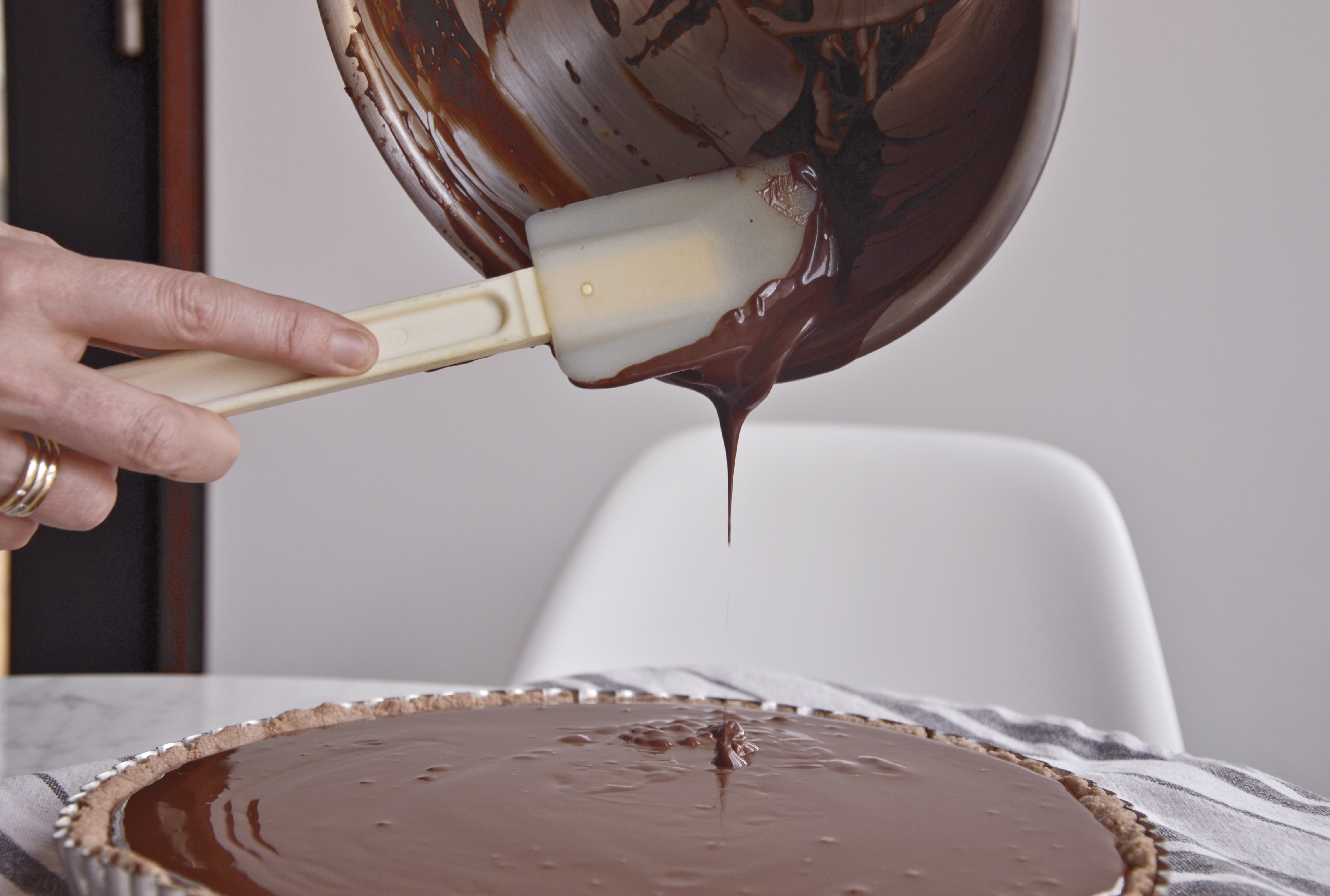
For the filling, put the chocolate in a medium heatproof bowl. In a small saucepan, heat the soy milk over medium heat until it begins to steam and almost comes to a boil. Add the salt and stir until dissolved. Pour the soy milk over the chocolate and let stand for 1 minute, then stir until the mixture is smooth and the chocolate is entirely melted.
Pour the filling into the baked tart shell and use an offset spatula to spread it evenly. Give the tart a gentle but firm rap on the counter to settle the filling and remove any air bubbles. Let the tart cool to room temperature, which should take about an hour. When it’s completely cool, sprinkle the fleur de sel evenly over the top and serve.
soba noodle avocado salad
March 2, 2013

Culturally speaking this is a bit of a mixed-up salad. Soba is Japanese for buckwheat. Avocado comes from the Spanish aguacate which in turn comes from the Nahuatl word āhuacatl, which goes back to the proto-Aztecan pa:wa. This recipe also calls for cilantro which is native to regions from southern Europe and North Africa to southwestern Asia. Corn comes from Mesoamerica. And beans? Well, they are citizens of the world. But despite heralding from all over the planet, the ingredients in this salad come together beautifully and harmoniously ready to dance on your tongue.
1 package soba noodles
4 green onions, chopped
1 cup corn niblets, either cooked and niblets removed from the cob, or canned / frozen
1 cup black beans, cooked and rinsed
1 small bunch cilantro, chopped finely
2 avocados, cubed
4 tbsps brown rice vinegar
4 tbsps lime juice
2 tsps agave nectar
4 tsps sesame oil
2 tsps sunflower oil
2 tsps jalapeño, minced
1/4 tsp sea salt

Cook the soba noodles according to the package directions.
Meanwhile, put the green onion, corn, black beans, cilantro, and avocado in a large serving bowl.
In a separate bowl, prepare the dressing by mixing the brown rice vinegar, lime, agave, oils, jalapeño, and salt in a bowl. Once the noodles are cooked through, toss with vegetables and dressing. Adjust seasoning with additional sea salt and pepper to taste. Serve immediately.
flapjacks
February 17, 2013
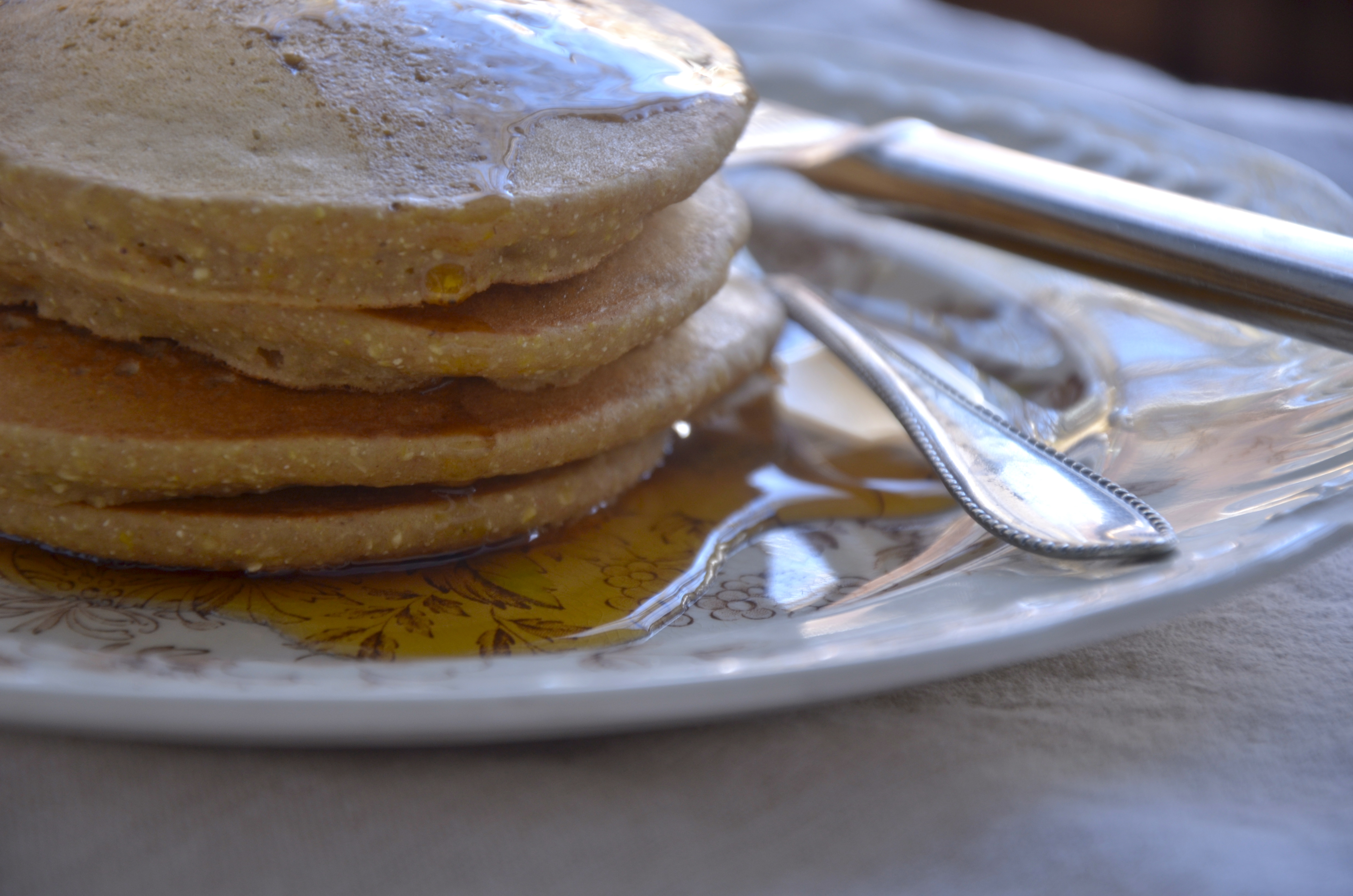
Did you know that in UK, Ireland and Australia, a flapjack is a sweet tray-baked oat bar made from rolled oats, butter, brown sugar and syrup, and that in Canada, the US, and South Africa a flapjack is a pancake? Well, these flapjacks are pancakes but made from rolled oats, cornmeal, and brown sugar drenched with 100% golden Canadian maple syrup. So I guess in a way they are the best of both. The recipe hails from Rebekah’s friend Helen for which I’m very grateful. They would be fabulous on a canoe trip, where Rebekah and Helen met, as you don’t need eggs, butter, or milk. But I just had them this morning, and they are equally tasty in downtown Toronto on a sunny Sunday morning with a good stiff cappuccino in hand.
2 1/2 cups whole wheat flour
1 cup fine or medium grind cornmeal or corn flour
1/2 cup quick cooking oats
1/4 cup brown sugar
2 tbsps baking powder
1/2 tsp salt
1 cup soy milk
1 tsp vanilla extract
1/2 cup wild blueberries, optional
Mix all the dry ingredients together in a large bowl. Remove 1 cup of dry ingredients into a second mixing bowl. To the 1 cup dry ingredients, add 1 cup of soy milk and 1 tsp of vanilla extract. Mix well. Add blueberries if you so desire. Add a little more soy milk if the batter is too thick. Cook on a pre-heated griddle and serve piping hot with maple syrup or homemade marmalade. Put the rest of the dry ingredients in a airtight container for next Sunday.
occhi di lupo with tuscan kale and roasted parsnips
February 10, 2013

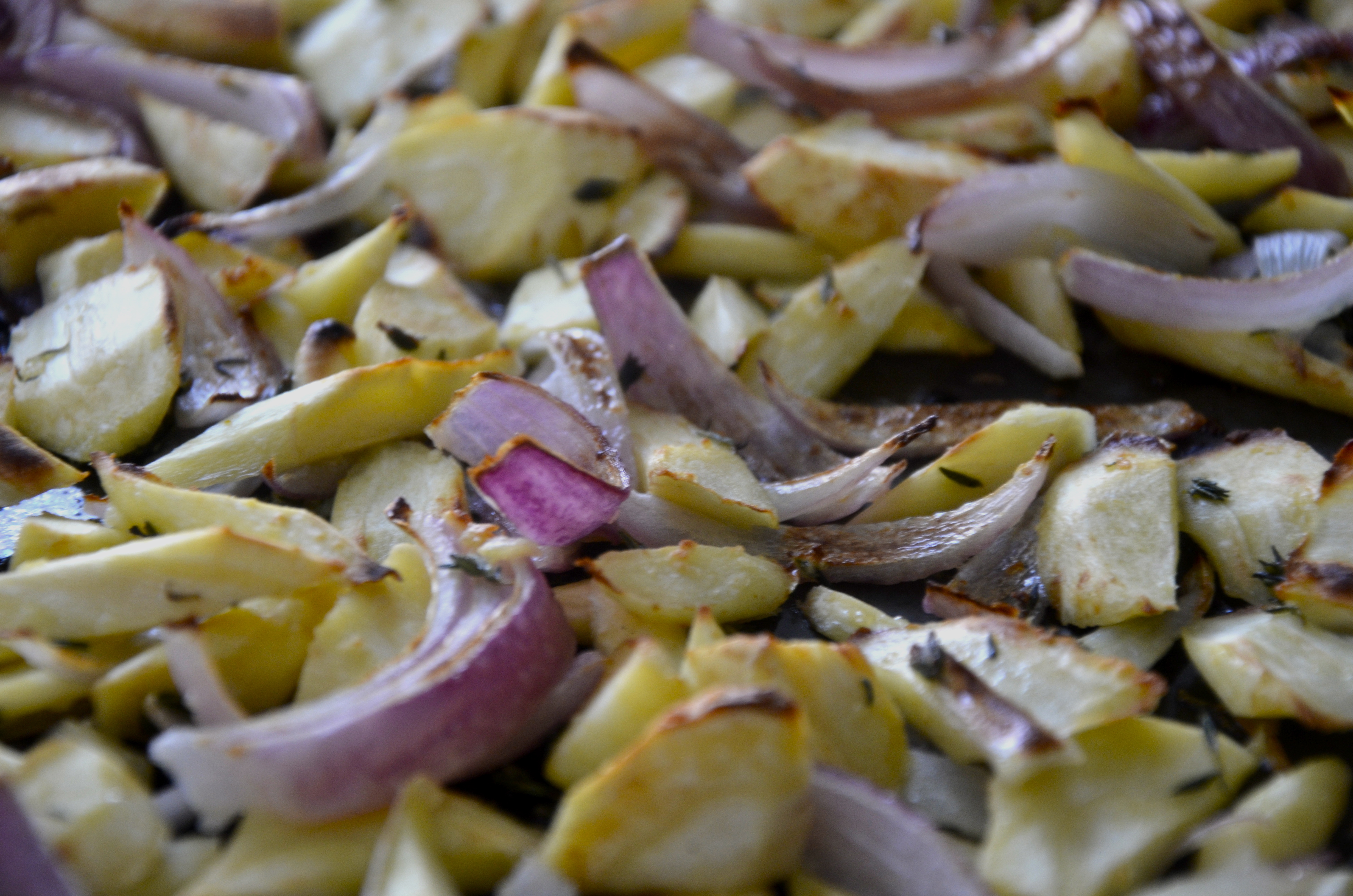
Don’t get bent out of shape if you don’t have occhi di lupo – literally wolf’s eyes – it’s just what I had in store in the pasta drawer. You could use orrechiette (little ears), capelli di pagliaccio (clown’s hats), or anything else that suits your fancy. Just choose a shape that helps hold the veggies and kale. Ribbons or rods don’t work as well for this recipe but, in my mind, it’s all good. This is a great winter recipe. It’s hearty and nutritious and relies heavily on all those good winter veggies like the robust greens, root vegetables, and onions. Of course you can top it off with parmigiano but for those not big on the dairy, picada is the best substitute I know.
Pasta
3 tbsps olive oil
2 onions, chopped in thin wedges
6 – 8 parsnips, cut thinly on the diagonal
2 cloves garlic, minced
2 sprigs thyme
1 lb tuscan kale, stems trimmed and chopped
1/2 tsp dried red chili flakes, crushed
1 lb of occhi di lupo or other pasta shape
sea salt and pepper
Picada
1/2 cup almonds, toasted
2 slices white country-style bread
4 cloves garlic
sea salt and pepper
Toss chopped parsnips and onion with 2 tbsps of the olive oil, minced garlic, thyme sprigs and some sea salt. Roast in a oven pre-heated to 375 degrees for about 20 minutes or until parsnips are golden brown. Remove from oven and set aside.
Heat remaining tablespoon olive oil in a heavy-bottomed skillet. Add kale and toss until just wilted. Sprinkle with crushed chili flakes. Set aside.
In the meantime, add your pasta to boiling salted water and cook, stirring occasionally, until al dente. Drain, reserving 1 cup of the pasta water.
For the picada, toast the almonds in an oven at 350F until they’re pale gold, 8 – 10 minutes. Remove and set aside. Meanwhile, slowly fry slices of white country-style bread in 2 tbsps olive oil until golden on both sides, or toast well in a toaster. Place the grilled bread or toast, almonds, 4 large garlic cloves and pinch of salt in a food processor to make a crumbly paste. Set aside.
Add pasta and 1/4 cup pasta water to kale and roasted parsnips and onion in a large bowl. Add more pasta water if needed. Divide pasta into bowls, drizzle with oil, and top generously with the picada.
harissa
January 26, 2013
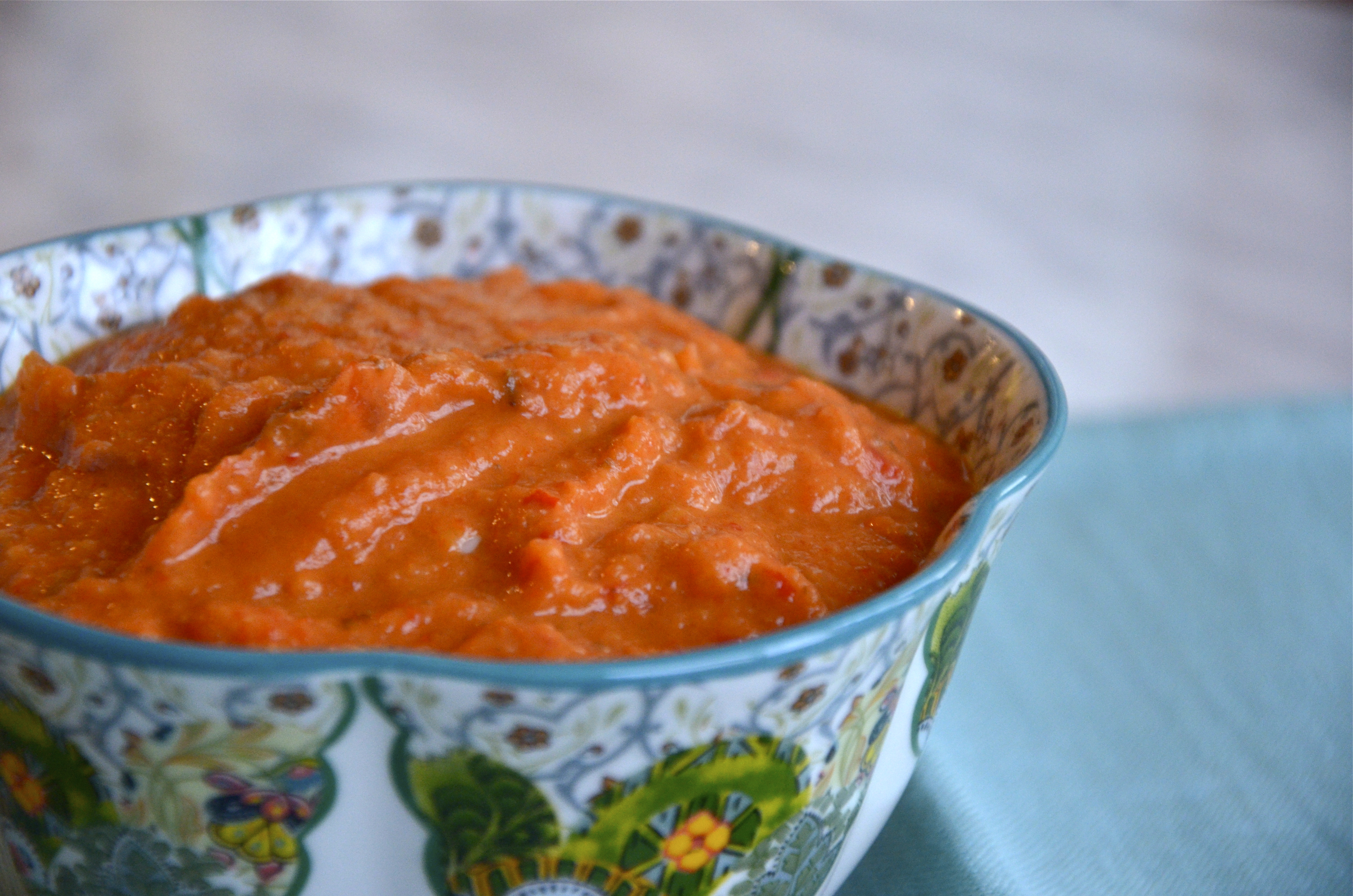
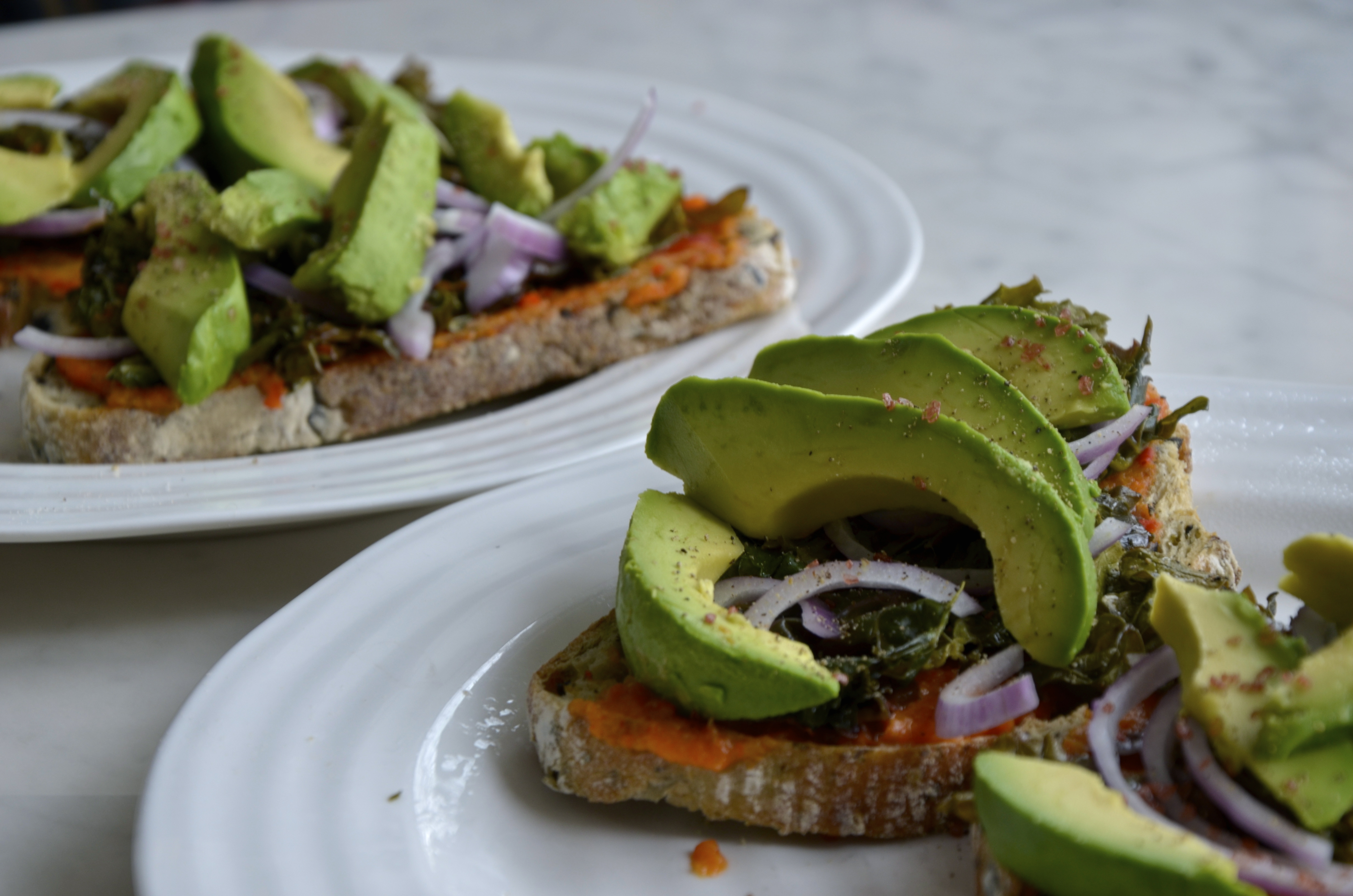
Many of you will know the magical powers of harissa. For those of you who don’t, you should. Harissa is a Tunisian hot chili sauce whose main ingredients include hot chili peppers, spices and herbs such as garlic paste, coriander, red chili powder, and olive oil. It is most closely associated with Tunisia, Libya and Algeria but its recently making inroads into Morocco and can be found in countries with a strong Arab presence like France and Israel where it is a common topping for falafel. Recipes for harissa vary according to the household and region. Variations can include the addition of cumin, red peppers, garlic, coriander, and lemon juice. This recipe is from Ottolenghi and Tamimi’s Jerusalem. I love it in a not-so-discrete pile next to a Moroccan Tagine, drizzled on top of smokey lentil soup, or simply spread on an open face sandwich topped with whatever suits your mood.
1 red pepper
1/2 tsp coriander seeds
1/2 tsp cumin seeds
1/2 tsp caraway seeds
1 1/2 tbsps olive oil
1 small red onion, coarsely chopped
3 cloves garlic, coarsely chopped
3 hot chilis, seeded and coarsely chopped
1 1/2 tsps tomato paste
2 tbsps freshly squeezed lemon juice
1/2 tsp sea salt
Place the pepper under a very hot broiler, turning occasionally for about 25 minutes until blackened on the outside and completely soft. Transfer to a paper bag or bowl covered with plastic wrap, and allow to cool. Peel the pepper and discard its skin and seeds.
Place a dry frying pan over low heat and lightly toast the coriander, cumin, and caraway seeds for 2 minutes. Remove them to a mortar and use a pestle to grind to a powder.
Heat the olive oil in the frying pan over medium heat, and fry the onion, garlic and chiles for 10 – 12 minutes, until a dark smokey colour and almost caramelized.
Now use a blender or food processor to blitz together all of the paste ingredients until smooth, adding a little more oil if needed. Store in a sterilized jar in the fridge for up to 2 weeks or even longer.
mushroom tart
January 21, 2013

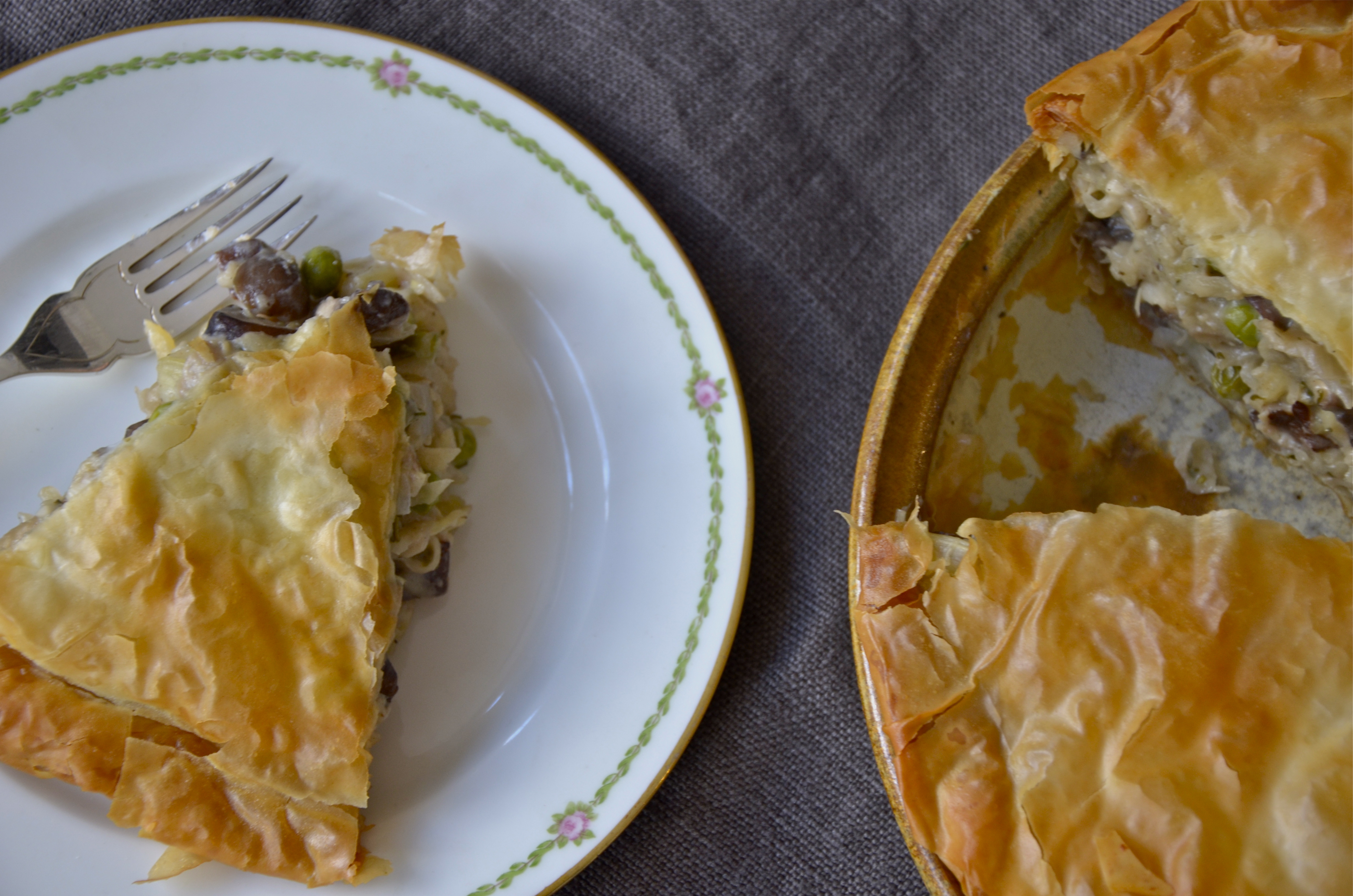
Last January I featured the Creamy Triple Mushroom Gemelli noting that every winter season should have its own favourite mushroom dish. Back in January 2011 it was Winter Portobello Stew. This January it’s this earthy, herb-infused mushroom tart with a beautifully browned flakey filo crust. It’s pretty easy to make although filo is always a little finicky. But on a dark, cold Sunday afternoon with some good music on and a winter exilir in hand like the hot apple mull, who cares? Let it take it awhile while you warm yourself by the hot stove.
4 tbsps olive oil + 1/2 cup for brushing on filo dough
20 ounces assorted mushrooms, chopped
1 cup celery, finely chopped
1 medium onion, finely chopped
6 gloves of garlic, finely chopped
3 tbsps fresh thyme, finely chopped
3 tbsps fresh marjoram, finely chopped
3 tbsps fresh rosemary, finely chopped
4 tbsps flour
1/2 cup dry white wine
1 cup vegetable stock
2 cups grated potato (approximately 2 medium potatoes)
4 tbsps soy cream
sea salt and pepper to taste
1 cup fresh or thawed peas
16 sheets of filo dough
In a large saute pan, heat oil over medium heat. Add mushrooms, celery, onions and garlic. Cook until tender. Stir in fresh thyme, marjoram, and rosemary.
Scatter flour over all the vegetables and stir. Cooking for a few minutes, so that the flour has a chance to cook. Stir in wine and stock, then lower temperature a bit. Stir occasionally while the sauce thickens up. Stir in soy cream. Start adding salt and pepper. The amount will vary according to how salty the stock is and/or what your palette likes. Make sure to taste it along the way.
Turn off heat and stir in grated potatoes and peas. Adjust seasoning again if necessary. Set aside to cool while prepping tart crust or place in fridge until ready to assemble.
Preheat oven to 375F.
Brush sides and bottom of tart pan with olive oil. Place first sheet of filo dough across tart pan, then brush with oil. Make sure to brush the dough that is on the side of the pan. Rotate placement of the next sheet slightly down from the last sheet. Brush with oil. Like it is the minute hand going around the clock face. Continue with all eight sheets around the tart pan. Make sure that the bottom, sides and edge of tart pan are all covered with filo and oil.
Place filling in tart pan. Cover tart with the next 8 sheets of filo in the same manner as the bottom layer. When finished, use kitchen scissors to trim edges, leaving a 1/2 inch over hang. Then go along edge and tuck edge into pan all the way around.
Bake for 35-45 minutes until filo is golden brown. Remove from oven and cool a bit. When cool to the touch, release edges from tart pan with knife. Then invert on to a platter. Cut into wedges and serve.
Adapted from Food52’s Mushroom and Pea Tart
raspberry thumbprint cookies
January 12, 2013
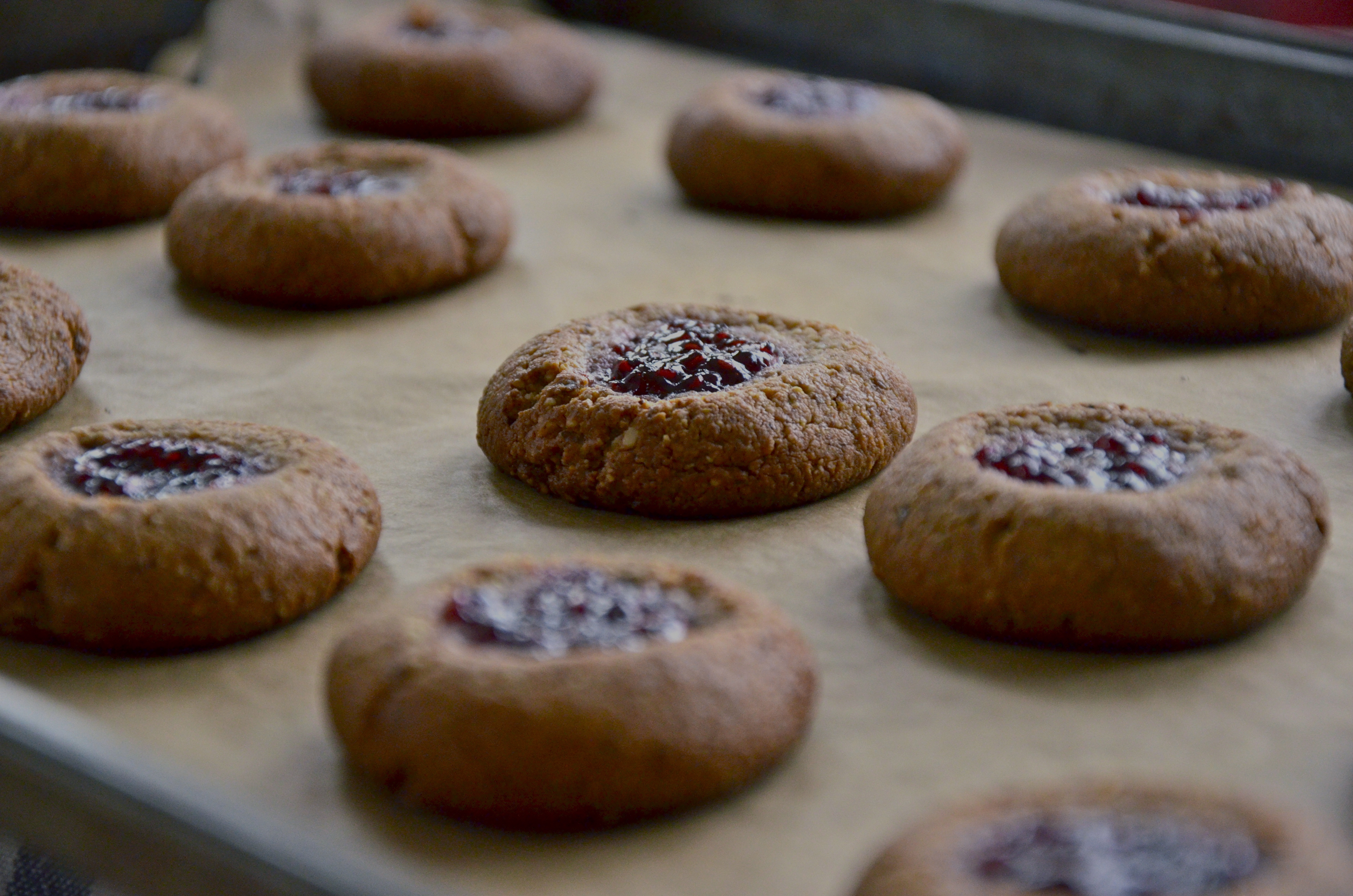
My friend Quinn added these cookies to her holiday repertoire and festive they are. But now it’s January, holidays are over, and we’re all getting over our holiday hangovers. But with these cookies – packed full of almonds, honey and flax – you need not worry. They are tasty, nutritious, light, and surprisingly simple in all their (almost) vegan glory. They do have honey in them which, if you are a hard-and-fast-vegan, you might not like. But find happy honey where the bees are treated right or substitute with agave nectar. The original recipe comes from Andrea Sarjeant who is a holistic nutritionist based out of Toronto. She also makes them with ½ teaspoon of ground ginger and peach or apricot jam instead of raspberry. Whatever tickles your fancy.
1 cup almond meal (or almond flour)
1/4 cup almond butter
3 tbsp raw unpasteurized honey
1 tbsp ground flax
1 tsp pure vanilla extract
½ tsp cinnamon
Naturally sweetened jam
Preheat oven to 350. In a large bowl, combine the almond meal, almond butter, honey, flax and cinnamon. You may need to get your hands in there to thoroughly mix everything! Test the dough’s stickiness by forming a small ball. If it’s too crumbly and won’t hold together, add one to two tablespoons of water.
Using a tablespoon to measure, scoop out some dough and form it into a ball. When the ball looks tight, put on cookie sheet lined with parchment paper and make an indent with your thumb. This is where you’ll put the jam. Repeat with the rest of the dough, then add the jam to each indent.
Bake in the oven until the cookies are browned, around 10-12 minutes. Remove from oven and allow to cool before eating, as the jam will be very, very hot.
Makes around 18 cookies.
asian brussels sprouts with mushrooms and shallots
January 5, 2013

We had a potluck dinner at my parents’ house the other day for my dad’s birthday. My sister was organizing it and decided to make sweet and sour tofu stir-fry as one of the main dishes; she asked me to bring a side. I had a pile of brussels sprouts that needed to be used up and decided to do an asian-inspired sprouts and ‘shroom dish with crispy shallots on top because after making them for the basmati and wild rice dish with chickpeas, currants, and herbs, we just can’t get enough. Deep flavours, different textures, roasted yumminess.
Pile of brussels sprouts, shaved finely
1/4 olive oil
5 cloves garlic minced
Pile of mixed mushrooms like miatake, shitake, oyster
4 tbsps soy or tamari sauce
2 tbsps brown rice vinegar
2 tbsps sesame oil
sea salt and pepper
1/2 cup sunflower oil
2 large shallots
3 tbsps flour
Preheat oven to 375 degrees. Shave or slice brussels sprouts finely with a knife or mandolin. Add them to a a oven-proof baking dish. Toss with olive oil and minced garlic and bake for about 20 – 30 minutes until they are cooked through (this will depend on how thinly they are cut).
Meanwhile, chop mushrooms into strips. Cook in a skillet over medium-high heat until they begin to brown and release their juices. Once cooked, add tamari sauce, rice vinegar, and sesame oil. Let the mushrooms cook in the tamari mixture for a few moments to let the mushrooms soak up the liquid and to let the flavours meld.
Toss the mushrooms with the brussels sprouts. Add sea salt and pepper to taste. Set aside.
Heat sunflower oil in a heavy skillet until quite hot. Slice shallots into rings. Toss in the flour. Add shallot rings to the hot sunflower oil and saute until they are golden brown. Remove with a slotted spoon onto paper towel and let cool. Cook in batches so that the shallots brown evenly.
Garnish brussels sprouts and mushrooms with crispy shallots and serve warm.
 v:gourmet

